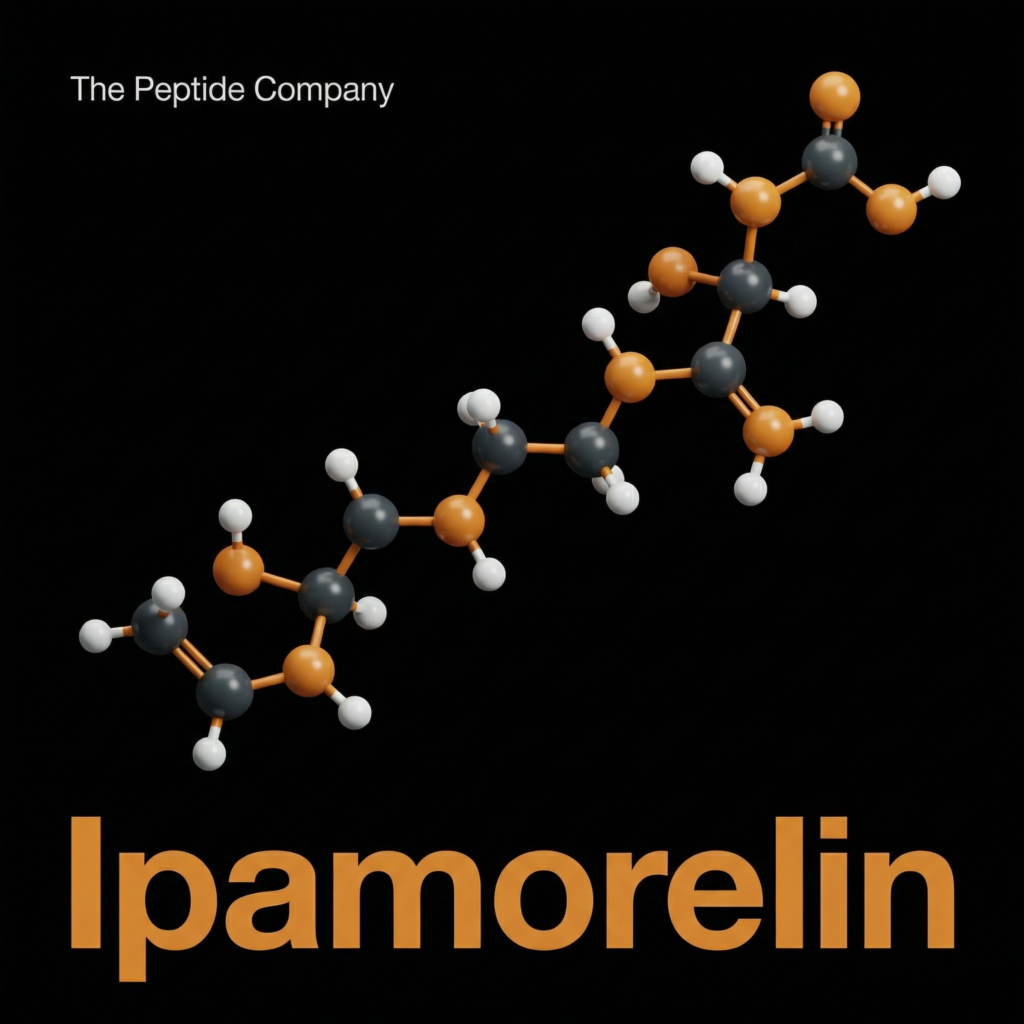
Ipamorelin is a synthetic pentapeptide and a selective agonist of the ghrelin/growth hormone secretagogue receptor (GHS-R1a). Distinct from other growth hormone-releasing peptides (GHRPs) such as GHRP-6 or GHRP-2, Ipamorelin is characterized in research literature by its high specificity for growth hormone (GH) release without significant stimulation of adrenocorticotropic hormone (ACTH), cortisol, or prolactin. This specificity has made it a significant subject of study in fields ranging from endocrinology to bone metabolism and gastrointestinal motility.
First synthesized in the mid-1990s, Ipamorelin (Aib-His-D-2-Nal-D-Phe-Lys-NH2) was developed to improve upon the pharmacological profile of earlier secretagogues, which often exhibited “off-target” hormonal effects. Research models suggest that Ipamorelin mimics the action of the endogenous ligand ghrelin by binding to GHS-R1a receptors in the anterior pituitary, thereby initiating a signal transduction cascade that amplifies GH secretion pulsatility.
MOLECULAR MECHANISMS OF GHS-R1 A ACTIVATIONAND SIGNALTRANSDUCTION
The primary mechanism of action for Ipamorelin involves the activation of the G protein-coupled receptor GHS-R1a. This receptor is densely expressed in the hypothalamus and pituitary gland. Unlike Growth Hormone Releasing Hormone (GHRH), which acts via the cAMP pathway, GHS-R1a activation by peptides like Ipamorelin triggers the phospholipase C (PLC) signaling pathway.
This distinct pathway allows Ipamorelin to act synergistically with endogenous GHRH. While GHRH stimulates the synthesis of GH, secretagogues like Ipamorelin primarily facilitate its release. Research indicates that this complementary action creates a more robust physiological response than either compound alone.
SelectivityandtheLackofCortisolStimulation
A defining characteristic of Ipamorelin in comparative studies is its selectivity. Early generations of GHRPs were potent stimulators of GH but also activated the hypothalamic-pituitary-adrenal (HPA) axis, leading to elevated cortisol and prolactin levels. Ipamorelin was designed specifically to minimize this effect.
PRECLINICAL FINDINGS: LONGITUDINAL BONE GROWTH AND BODY COMPOSITION
Extensive preclinical research has evaluated the downstream effects of Ipamorelin-induced GH secretion on tissue growth, specifically focusing on longitudinal bone growth and body weight gain in rodent models. These studies provide foundational data for understanding the anabolic potential of selective secretagogues.
These findings align with the established biological role of the GH/IGF-1
axis, wherein pulsatile GH secretion stimulates the hepatic production of Insulin-like Growth Factor 1 (IGF-1), the primary mediator of somatic growth. By amplifying the natural pulsatility of GH rather than providing a continuous elevation, Ipamorelin appears to maintain the physiological pattern necessary for optimal tissue responsiveness.
METABOLICSIGNALINGANDNITROGENBALANCE
Beyond skeletal growth, Ipamorelin has been investigated for its influence on catabolic states. Research involving glucocorticoid-induced catabolism has highlighted the peptide’s ability to counteract muscle wasting and improve nitrogen balance. This is of particular interest in research focused on mitigating the side effects of chronic steroid use or wasting diseases.
COMPARATIVE ANALYSIS:GASTROINTESTINAL MOTILITY ANDSAFETY PROFILE
The GHS-R1a receptor is also expressed in the gastrointestinal tract, where endogenous ghrelin regulates motility and gastric emptying. Research comparing Ipamorelin to other GHS agonists like GHRP-6 has elucidated differences in their impact on GI physiology. While GHRP-6 is known to significantly accelerate gastric emptying and increase hunger via hypothalamic NPY neuron activation, Ipamorelin appears to have a more neutral profile in this regard.
SOURCED STUDIES
Ipamorelin is a synthetic pentapeptide and selective agonist of the ghrelin/growth hormone secretagogue receptor (GHS-R1a). Research models use ipamorelin to study growth hormone (GH) release, pituitary signaling, and metabolic pathways because it produces GH elevation without strong activation of ACTH, cortisol, or prolactin. This selectivity makes it a preferred tool for isolating GH-specific signaling events.
Earlier secretagogues often triggered broad endocrine responses, including increases in ACTH, cortisol, or prolactin. Ipamorelin was engineered to reduce these off-target effects while maintaining robust GH secretagogue activity. Comparative studies show ipamorelin binds GHS-R1a with high specificity and produces a cleaner GH-dominant response profile in experimental systems.
Ipamorelin binds to GHS-R1a receptors in the anterior pituitary, initiating the same intracellular signaling cascade activated by endogenous ghrelin. This includes G-protein–coupled receptor signaling, calcium flux, and downstream activation of GH release mechanisms. These pathways are used to study GH secretion biology and metabolic regulation in controlled laboratory models.
Research has evaluated ipamorelin’s effects on growth hormone release, bone remodeling pathways, gastrointestinal motility, metabolic homeostasis, and neuroendocrine circuits. Its selectivity makes it suitable for differentiating GH-dependent processes from broader endocrine responses seen with other GHRPs.
Some ipamorelin-related compounds have been explored clinically, but the context here refers strictly to research-grade material. Ipamorelin should be described only as a laboratory reference compound, not for human or veterinary use, and not associated with treatment outcomes or clinical application. Literature summaries should remain background information rather than usage guidance.
Ipamorelin is typically presented as a selective GHS-R1a agonist used to probe GH release, pituitary signaling biology, and metabolic pathways in experimental models. Care should be taken to avoid implying therapeutic intent, dosing relevance, or clinical claims.
PMID
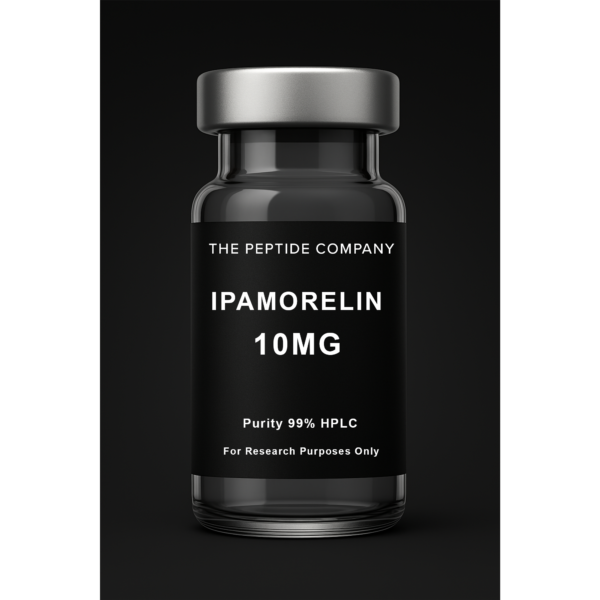
Ipamorelin 10mg is a research peptide studied for its selective interaction with growth hormone secretagogue receptor (GHS-R) pathways and pulsatile endocrine signaling in controlled laboratory research models. For research use only.
Semaglutide : GLP-1 Receptor Agonism, Incretin Signaling, and Metabolic Regulation
GHRP‑2 : Pituitary Axis Modulation, Ghrelin Receptor Activation, and Cellular Recovery Research
ACE‑031 : Myostatin Inhibition, Muscle Hypertrophy, and Regenerative Research