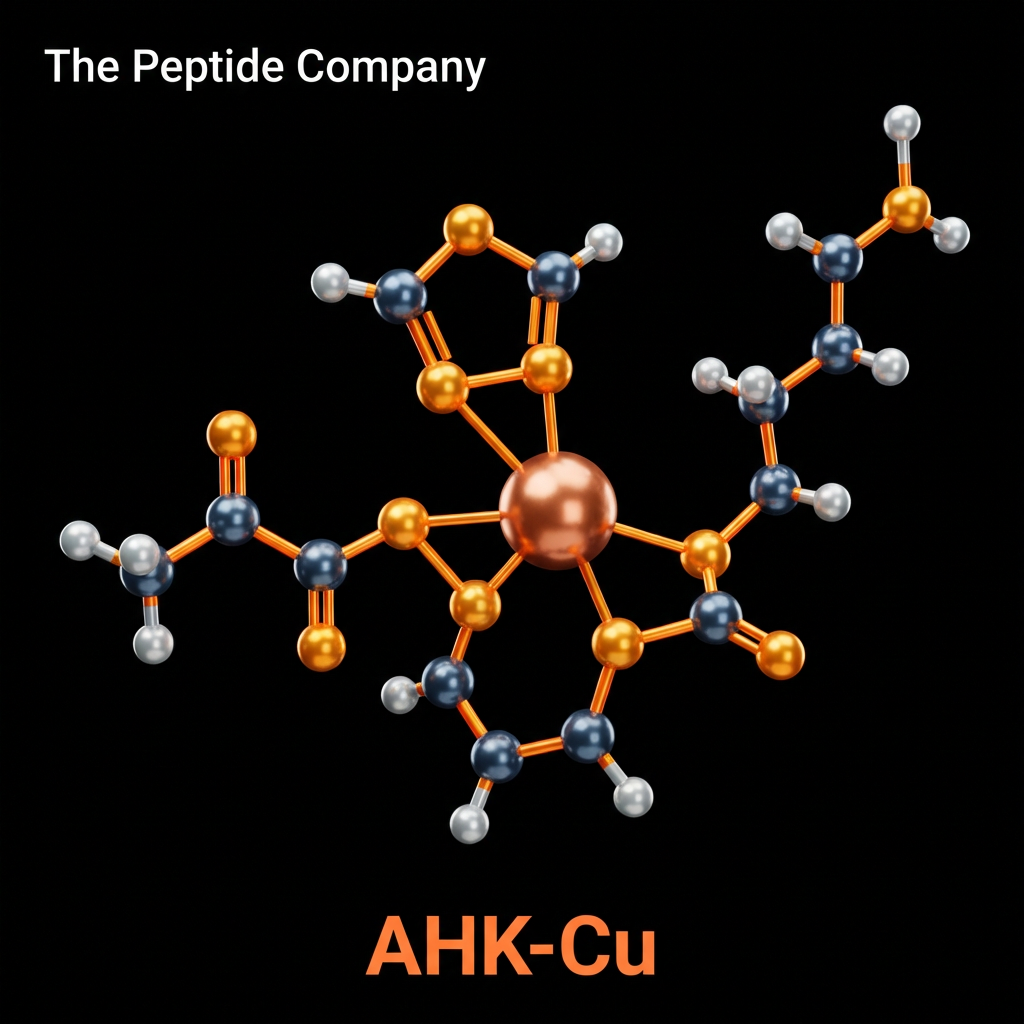
AHK-Cu (Ala-His-Lys-Cu2+), also referred to as copper tripeptide-3, is a naturally occurring peptide complex that plays a pivotal role in extracellular matrix (ECM) homeostasis, angiogenesis, and tissue regeneration. Though structurally similar to the widely studied GHK-Cu (Gly-His-Lys-Cu2+), AHK-Cu exhibits distinct binding affinities and biological activities, particularly in the context of hair follicle development and fibroblast regulation. As a member of the copper-binding peptide family, it functions not merely as a carrier of copper ions but as a potent signaling molecule capable of modulating gene expression profiles related to collagen synthesis, elastin formation, and antioxidant defense systems.
Research into AHK-Cu has largely focused on its ability to stimulate the proliferation of dermal fibroblasts and promote the synthesis of critical ECM components. The peptide’s mechanism involves the safe and efficient delivery of copper (II) ions into the intracellular environment, where copper serves as an essential cofactor for enzymes such as lysyl oxidase (required for collagen cross-linking) and cytochrome c oxidase (essential for mitochondrial energy production). Furthermore, AHK-Cu has been shown to downregulate the expression of Transforming Growth Factor-beta 1 (TGF-β1), a pro-fibrotic cytokine often implicated in hair follicle miniaturization and excessive scar formation.
The therapeutic interest in AHK-Cu extends beyond simple wound healing to complex dermatological applications, including the reversal of photoaging and the stimulation of hair growth. In-vitro and ex-vivo models have demonstrated that AHK-Cu can prolong the anagen (growth) phase of the hair cycle and inhibit the apoptosis of follicular papilla cells. These findings position AHK-Cu as a significant subject of investigation in regenerative dermatology, offering a multi-targeted
approach to tissue repair that integrates anti-inflammatory, angiogenic,
and proliferative signaling pathways.
MOLECULAR STRUCTUREANDCOPPER IONCOORDINATIONCHEMISTRY
The AHK-Cu complex consists of the tripeptide sequence Alanine-Histidine-Lysine chelated to a copper (II) ion. The coordination chemistry of this complex is critical to its biological function. The histidine residue provides a high-affinity binding site for copper, forming a thermodynamically stable yet kinetically labile complex. This unique property allows the peptide to effectively sequester potentially toxic free copper ions from the extracellular milieu while readily donating them to copper-dependent enzymes within the cell. The dissociation constant (Kd) of AHK-Cu is optimized to facilitate this transfer mechanism without inducing oxidative stress associated with free redox-active metals.
This precise control over copper bioavailability is fundamental to the peptide’s safety profile. Copper is an obligate cofactor for lysyl oxidase, the enzyme responsible for the covalent cross-linking of collagen and elastin fibrils. By facilitating the targeted delivery of copper to this enzyme, AHK-Cu directly supports the structural maturation of the ECM. Research indicates that the peptide-copper complex is taken up by cells through specific membrane transporters, specifically the hCtr1 high-affinity copper transporter, triggering downstream signaling cascades independent of simple metal ion availability.
MECHANISMS OF COLLAGENSYNTHESIS AND MATRIXMETALLOPROTEINASE REGULATION
A central focus of AHK-Cu research is its capacity to modulate the balance between ECM synthesis and degradation. Fibroblasts treated with AHK-Cu exhibit a marked upregulation in the transcription of type I and type III collagen genes. This anabolic effect is complemented by the regulation of matrix metalloproteinases (MMPs) and their tissue inhibitors (TIMPs). In chronic wounds or photoaged skin, the balance is often tipped toward excessive degradation; AHK-Cu appears to restore equilibrium by promoting remodeling rather than destruction.
Further mechanistic studies suggest that AHK-Cu influences the expression of small leucine-rich proteoglycans (SLRPs) such as decorin and lumican, which are essential for proper collagen fibrillogenesis. By organizing collagen fibers into coherent bundles, these proteoglycans contribute to the tensile strength and elasticity of the skin. The ability of AHK-Cu to stimulate not just collagen protein production but also the synthesis of its organizing chaperones highlights its comprehensive role in tissue reconstruction.
ANTIOXIDANTPROPERTIESANDFREERADICALSCAVENGING
Oxidative stress is a primary driver of cellular aging and tissue damage. AHK-Cu functions as a potent antioxidant through multiple mechanisms. Firstly, by chelating free copper and iron ions, it prevents them from catalyzing the formation of toxic hydroxyl radicals. Secondly, it upregulates the activity of the endogenous antioxidant enzyme superoxide dismutase (SOD). The copper-zinc dependent superoxide dismutase (Cu,Zn-SOD) relies on the delivery of copper for its catalytic activity, and AHK-Cu serves as an efficient donor.
By mitigating oxidative stress, AHK-Cu preserves the viability of stem cell populations within the skin and hair follicles. ROS accumulation is known to induce senescence in dermal papilla cells; therefore, the reduction of intracellular oxidative burden is a key mechanism by which AHK-Cu prolongs the proliferative capacity of these tissues. This protective effect is particularly relevant in the context of extrinsic aging caused by environmental pollutants and UV radiation.
ANGIOGENESISANDWOUNDHEALINGSIGNALINGPATHWAYS
Effective tissue regeneration requires the re-establishment of a functional vascular network. AHK-Cu has been identified as a pro-angiogenic factor, stimulating the proliferation of endothelial cells and the formation of new capillary structures. This activity is mediated through the upregulation of Vascular Endothelial Growth Factor (VEGF) and basic Fibroblast Growth Factor (bFGF). In wound healing models, this angiogenic response accelerates the formation of granulation tissue and improves nutrient delivery to the repairing site.
The angiogenic properties of AHK-Cu are tightly regulated. While it promotes vessel formation during the proliferative phase of wound healing, it does not appear to induce uncontrolled vascular growth
associated with tumorigenesis. This regulation is thought to involve the
modulation of angiostatin and thrombospondin expression, ensuring that blood vessel formation ceases once tissue perfusion is restored. This self-limiting characteristic makes AHK-Cu a promising candidate for therapeutic angiogenesis in chronic diabetic ulcers and ischemic wounds.
ANTI-INFLAMMATORYEFFECTSANDCYTOKINEMODULATION
Chronic inflammation impedes regeneration and leads to tissue fibrosis. AHK-Cu exhibits significant anti-inflammatory activity by modulating the secretion of cytokines and chemokines. It inhibits the activation of Nuclear Factor-kappa B (NF-κB), the master regulator of inflammation, thereby suppressing the production of TNF-α, IL-6, and IL-1β. This anti-inflammatory action helps to resolve the inflammatory phase of wound healing and transition the tissue into the remodeling phase.
The modulation of iron metabolism also contributes to this anti-inflammatory profile. By sequestering free iron released from damaged cells, AHK-Cu prevents iron-dependent lipid peroxidation, which acts as a potent chemotactic signal for neutrophil recruitment. This dampening of the initial inflammatory wave prevents excessive collateral tissue damage and sets a favorable environment for regenerative processes to occur.
COMPARISONWITHGHK-CUANDOTHERCOPPERPEPTIDES
While GHK-Cu is the most well-known copper peptide, AHK-Cu offers a distinct biological profile that makes it preferable for certain applications. Structural studies indicate that the substitution of Glycine with Alanine increases the hydrophobicity of the peptide, potentially enhancing its penetration into lipid-rich structures such as the hair follicle and cell
membranes. Furthermore, comparative studies suggest differences in
receptor affinity and gene regulation patterns.
This differentiation suggests a specialized role for AHK-Cu in trichology (hair science) and deep-tissue regeneration, whereas GHK-Cu remains the standard for general skin rejuvenation and wound care. The specific binding kinetics of AHK-Cu to the copper ion also result in a slightly different redox potential, which may influence its specific interaction with redox-sensitive signaling proteins in the cytoplasm.
DERMATOLOGICALAPPLICATIONS:PHOTOAGINGANDSKINBARRIER FUNCTION
The cumulative effects of UV radiation lead to photoaging, characterized by collagen fragmentation, elastin degradation, and the formation of wrinkles. AHK-Cu addresses these issues by stimulating the replacement of damaged ECM components and restoring the structural integrity of the dermis. Additionally, the peptide enhances skin barrier function by promoting the synthesis of ceramides and tight junction proteins, improving hydration and resilience against environmental aggressors.
Research also indicates that AHK-Cu can inhibit the activity of elastase, the enzyme responsible for breaking down elastin. By preserving elastin
fibers, the peptide helps maintain skin elasticity and prevents the
sagging associated with age. This comprehensive remodeling effect positions AHK-Cu as a potent bioactive ingredient for anti-aging formulations designed to restructure aging skin from the inside out.
HAIRGROWTHRESEARCHANDFOLLICULARSTEMCELLACTIVATION
Perhaps the most distinct area of AHK-Cu research lies in its effects on hair growth. Androgenetic alopecia and other forms of hair loss are characterized by the miniaturization of the hair follicle and a shortened anagen phase. AHK-Cu has been extensively studied for its ability to counteract these processes by stimulating the proliferation of dermal papilla cells (DPCs) and inhibiting the production of factors that induce catagen (regression).
Further research suggests that AHK-Cu activates the Wnt/β-catenin pathway, a fundamental signaling cascade for hair follicle morphogenesis and cycling. By stabilizing β-catenin and promoting its nuclear translocation, the peptide activates transcriptional programs that maintain the “stemness” of follicular stem cells. This regenerative mechanism offers a promising avenue for therapies aimed at reversing follicular miniaturization and restoring hair density in non-scarring alopecias.
SOURCEDSTUDIES
(2)Pyo, H.K., et al. “The effect of tripeptide-copper complex on human hair growth in vitro.”
ArchivesofPharmacalResearch, vol. 30, no. 7, 2007, pp. 834-839. DOI: 10.1007/BF02977612.
AHK-Cu (Ala-His-Lys-Cu²⁺), commonly referred to as copper tripeptide-3, is a naturally occurring copper-binding peptide complex studied for its involvement in extracellular matrix regulation, angiogenesis signaling, and cellular remodeling pathways. Research models use AHK-Cu to explore tissue regeneration mechanisms and ECM-associated signaling processes.
AHK-Cu is investigated for its role in regulating extracellular matrix components such as collagen, elastin, and glycosaminoglycans. Studies examine how copper-binding peptides influence fibroblast activity, matrix turnover, and structural protein expression involved in tissue maintenance.
Research suggests that AHK-Cu participates in multiple cellular signaling pathways associated with wound-response biology, growth factor signaling, and ECM remodeling. These pathways may involve modulation of metalloproteinases, cytokine signaling, and angiogenic mediators.
AHK-Cu shares structural similarities with the well-known copper peptide GHK-Cu. Both peptides coordinate copper ions and are studied for their roles in tissue repair signaling, ECM modulation, and cellular communication processes.
Laboratory investigations evaluate AHK-Cu in the context of dermal regeneration signaling, angiogenesis pathways, hair follicle biology, and cellular proliferation mechanisms. These studies focus on molecular signaling networks rather than therapeutic applications.
Copper ions serve as essential cofactors in numerous biological reactions. When bound to peptides such as AHK, copper may influence redox activity, enzyme regulation, and signaling cascades associated with tissue remodeling and cellular communication.
AHK-Cu should be presented as a copper-binding tripeptide complex studied for its role in extracellular matrix signaling, dermal biology, and regenerative pathway research. Descriptions should remain within a research context and avoid therapeutic or clinical claims.
Decorin : TGF-β Regulation, Extracellular Matrix Signaling, and Fibrosis Modulation
FOXO4-DRI : Targeting Cellular Senescence Through p53–FOXO4 Disruption and Senolytic Research
B7‑33 : Relaxin Pathway Modulation and Fibrosis Regulation in Cellular Signaling Research
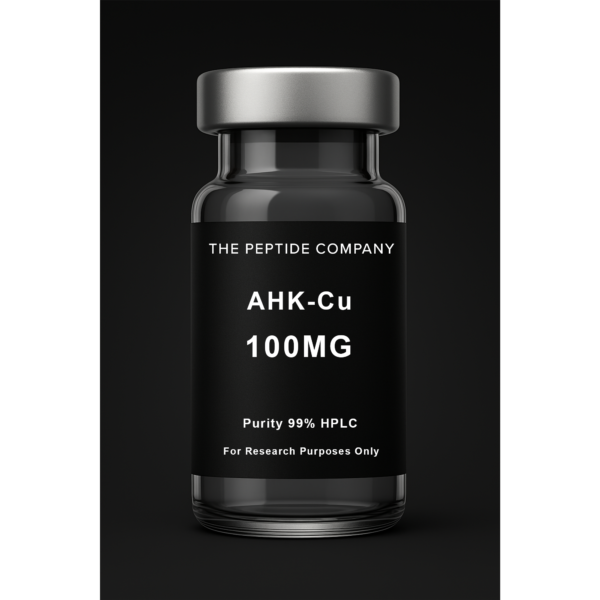
AHK-Cu 100mg is a copper peptide research compound studied for its interactions with extracellular matrix signaling, skin biology pathways, and peptide–copper complex activity in controlled laboratory research models. For research use only.
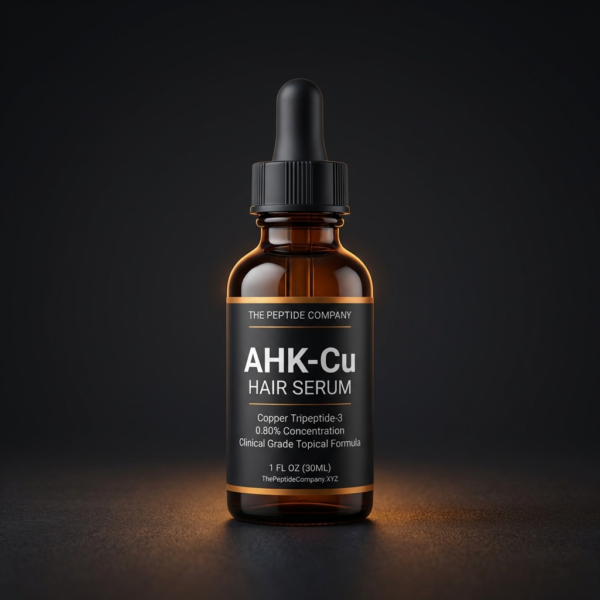
AHK-Cu Hair Serum with 0.80% Copper Tripeptide-3. Clinical-grade topical formula studied for hair follicle signaling, growth phase extension, and scalp regeneration. For research use only.