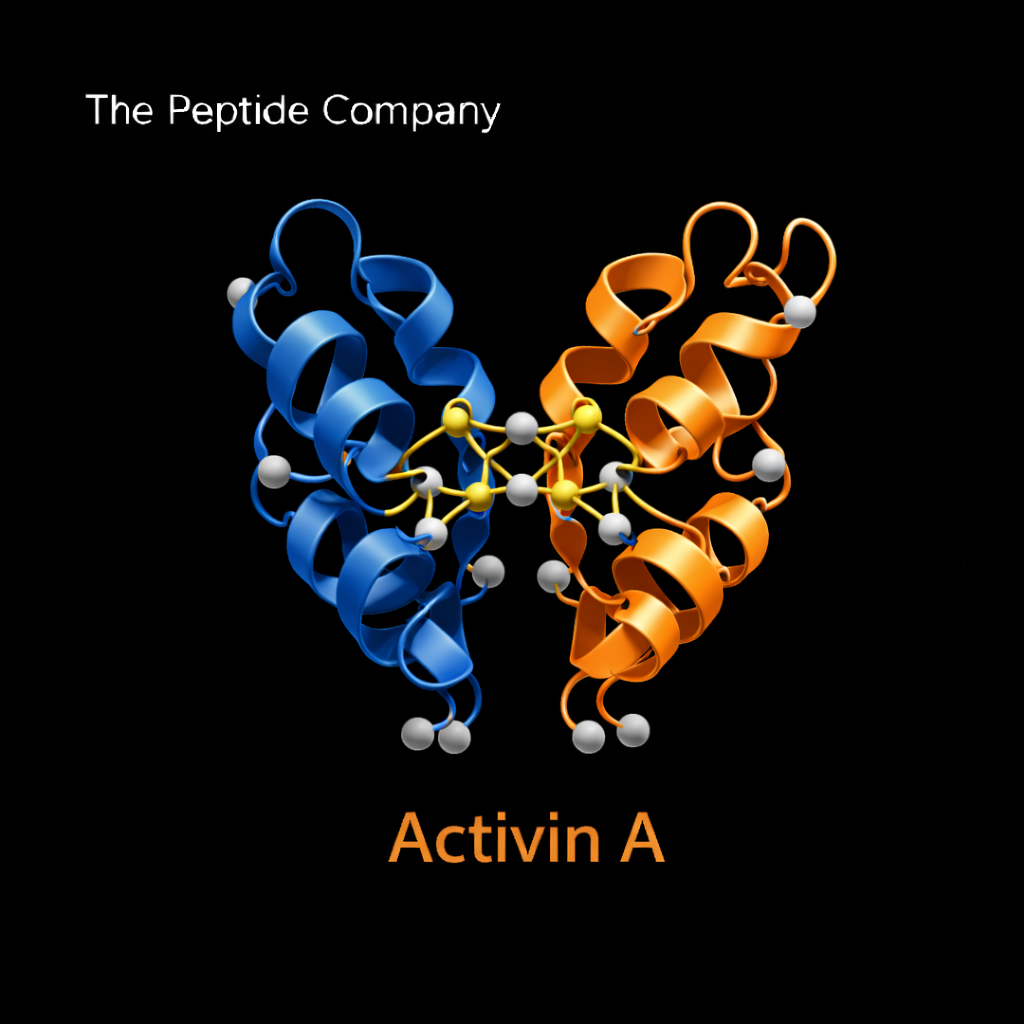
Abstract & Overview
Activin A is a dimeric protein belonging to the transforming growth factor-beta (TGF-β) superfamily and serves as a key regulator of cellular growth, differentiation, fibrosis signaling, and endocrine function. Originally characterized for its role in reproductive hormone regulation, Activin A is now recognized as a central mediator within muscle biology, extracellular matrix remodeling, inflammatory signaling, and SMAD2/3 transcriptional control. Its shared receptor usage with myostatin places it at the intersection of muscle mass regulation and fibrotic signaling pathways.
TGF-β Superfamily Context
Activin A is structurally and functionally related to other TGF-β superfamily ligands, including myostatin (GDF-8), TGF-β1, and growth differentiation factors. Members of this superfamily signal through type II and type I serine/threonine kinase receptors and regulate transcription via SMAD proteins. Activin A specifically activates SMAD2 and SMAD3 pathways, influencing gene expression programs involved in tissue remodeling, inflammation, and growth regulation.
Molecular Structure and Dimer Formation
Activin A is composed of two beta-A subunits linked by disulfide bonds, forming a homodimeric structure. This dimerization is essential for receptor binding and downstream signaling. The mature protein is generated through proteolytic processing of precursor forms, similar to other TGF-β superfamily ligands.
Receptor Binding and SMAD2/3 Activation
Activin A binds primarily to activin type II receptors (ActRIIA and ActRIIB), which subsequently recruit and phosphorylate type I receptors. This receptor complex phosphorylates SMAD2 and SMAD3 transcription factors, which then associate with SMAD4 and translocate to the nucleus. Nuclear SMAD complexes regulate gene expression programs controlling extracellular matrix deposition, cellular proliferation, and differentiation.
Activin A and Muscle Biology
In skeletal muscle, Activin A functions similarly to myostatin as a negative regulator of muscle growth. Elevated Activin A signaling has been associated with suppression of myoblast differentiation and promotion of catabolic signaling pathways. Because Activin A and myostatin share receptor pathways, they contribute to overlapping regulatory control of muscle mass and anabolic balance.
Fibrosis and Extracellular Matrix Remodeling
Activin A has been implicated in fibrotic signaling through stimulation of fibroblast activation and extracellular matrix protein synthesis. Increased Activin A expression in experimental models correlates with enhanced collagen deposition and tissue remodeling. Its signaling interaction with SMAD2/3 places it within the broader network of TGF-β–mediated fibrotic pathways.
Interaction With Follistatin and Binding Proteins
Follistatin serves as a high-affinity binding protein that neutralizes Activin A, preventing receptor interaction. This regulatory mechanism provides a physiological counterbalance to Activin-mediated signaling. The Activin–Follistatin axis is central to muscle growth regulation, reproductive biology, and systemic inflammatory modulation.
Endocrine and Reproductive Roles
Activin A was originally identified for its role in regulating follicle-stimulating hormone (FSH) secretion within the pituitary gland. Through endocrine signaling networks, Activin A influences reproductive function, gonadal signaling, and hormonal feedback systems. These endocrine roles extend its relevance beyond musculoskeletal biology.
Inflammatory and Immune Signaling
Emerging research suggests that Activin A participates in immune signaling and inflammatory modulation. Expression patterns increase in certain inflammatory states, indicating cross-talk between TGF-β superfamily signaling and immune regulation pathways.
Comparison With Myostatin and TGF-β1
While myostatin is more muscle-specific and TGF-β1 is broadly fibrotic and immunomodulatory, Activin A occupies an intermediate position within the signaling hierarchy. It shares receptor pathways with myostatin but also participates in broader endocrine and inflammatory networks. Understanding these distinctions clarifies the signaling architecture of the TGF-β superfamily.
Research Applications
Activin A is studied in experimental models of muscle wasting, fibrosis, reproductive biology, inflammatory disorders, and extracellular matrix remodeling. Investigative approaches include receptor antagonism, ligand neutralization, genetic modulation, and SMAD pathway analysis.
Limitations and Open Research Questions
Important research questions remain regarding tissue-specific effects, receptor competition with related ligands, and long-term signaling adaptations. Further investigation is required to clarify how Activin A integrates with systemic endocrine and metabolic networks.
Summary
Activin A is a multifunctional TGF-β superfamily ligand that regulates muscle mass, fibrosis signaling, endocrine feedback, and inflammatory pathways through SMAD2/3-mediated transcriptional control. Its shared receptor usage with myostatin and modulation by follistatin position it as a central node in muscle–fibrosis cross-talk and extracellular matrix biology.
Educational & Research Disclaimer
This document is provided for educational and scientific research purposes only. No medical, therapeutic, or usage claims are made. Activin A and related signaling modulators are not approved for human use and are intended solely for controlled laboratory and academic investigation.
Activin A is a dimeric protein belonging to the transforming growth factor-beta (TGF-β) superfamily. It functions as a signaling molecule that regulates cellular differentiation, growth, inflammation, and extracellular matrix remodeling through SMAD transcription pathways.
Activin A binds to type II activin receptors (ActRIIA or ActRIIB), which recruit and activate type I receptors. This receptor complex phosphorylates SMAD2 and SMAD3 proteins, allowing them to enter the nucleus and regulate gene expression involved in tissue development and remodeling.
Activin A is structurally and functionally related to other members of the TGF-β superfamily, including myostatin, growth differentiation factors (GDFs), and transforming growth factor-beta proteins. These ligands share similar receptor systems and intracellular SMAD signaling mechanisms.
Activin A participates in signaling networks that regulate muscle growth, tissue remodeling, and fibrosis. Its interaction with pathways shared by myostatin places it at the intersection of muscle regeneration signaling and fibrotic regulation.
Elevated Activin A signaling has been associated with increased extracellular matrix production and fibrotic tissue remodeling in several organs. Because of its role in SMAD-mediated transcription, it is frequently studied in the context of fibrosis and inflammatory signaling.
Activin A signaling often overlaps with pathways involving myostatin, TGF-β, and other growth differentiation factors. These pathways coordinate tissue growth, cellular differentiation, and inflammatory responses through shared receptor systems and SMAD transcription factors.
PMID: 25470548
PMID: 20844133
PMID: 22188969
PMID: 16716579
PMID: 21325640
PMID: 29899388
PMID: 19286916
Myostatin (GDF-8): Muscle Growth Regulation, TGF-β Superfamily Signaling, and Anabolic Homeostasis
Decorin : TGF-β Regulation, Extracellular Matrix Signaling, and Fibrosis Modulation