Introduction
Glutathione (GSH) is a tripeptide composed of glutamate, cysteine, and glycine and is one of the most abundant intracellular antioxidants. It plays a central role in maintaining cellular redox balance, detoxification processes, mitochondrial function, and regulation of cellular signaling pathways. Due to its broad involvement in oxidative stress management, glutathione is a foundational molecule in biochemical and cellular research.
Molecular Structure and Biosynthesis
Glutathione’s unique γ-glutamyl bond between glutamate and cysteine confers stability and functional specificity. Biosynthesis occurs in two ATP-dependent steps catalyzed by glutamate–cysteine ligase (GCL) and glutathione synthetase (GS). Cellular availability of cysteine is rate-limiting, linking glutathione synthesis to amino acid metabolism and redox demand.
Redox Cycling and Antioxidant Function
Glutathione exists in reduced (GSH) and oxidized (GSSG) forms, enabling dynamic redox cycling. Glutathione peroxidases (GPxs) utilize GSH to neutralize hydrogen peroxide and lipid peroxides, while glutathione reductase regenerates GSH from GSSG using NADPH. The GSH:GSSG ratio is a key indicator of cellular redox status in research models.
Detoxification and Conjugation Pathways
Glutathione participates in phase II detoxification through conjugation reactions catalyzed by glutathione S-transferases (GSTs). These reactions increase solubility of electrophilic compounds, facilitating their removal. Research explores glutathione’s role in xenobiotic metabolism, environmental toxin handling, and cellular defense against reactive intermediates.
Mitochondrial Function and Oxidative Stress
Mitochondrial glutathione pools are essential for maintaining oxidative phosphorylation efficiency and preventing oxidative damage to mitochondrial DNA, lipids, and proteins. Studies examine glutathione transport into mitochondria and its role in preserving mitochondrial membrane integrity and respiratory chain function under stress conditions.
Regulation of Cellular Signaling
Beyond antioxidant activity, glutathione modulates redox-sensitive signaling pathways. Protein S-glutathionylation serves as a reversible post-translational modification that influences enzyme activity, transcription factor binding, and signal transduction. This positions glutathione as a regulator of cellular communication in research settings.
Immune and Inflammatory Research
Glutathione status influences immune cell function, cytokine production, and inflammatory signaling. Research investigates how glutathione levels affect lymphocyte proliferation, macrophage activity, and the balance between pro- and anti-inflammatory transcriptional programs.
Summary
Glutathione is a central tripeptide antioxidant studied for its roles in redox homeostasis, detoxification, mitochondrial protection, and regulation of cellular signaling. Its integration into metabolic, immune, and stress-response pathways makes glutathione a cornerstone molecule in cellular and biochemical research.
Educational & Research Disclaimer
This article is for educational and scientific research purposes only. No therapeutic claims or usage recommendations are provided. Compounds referenced are not approved for human use and are intended solely for controlled laboratory experimentation.
Glutathione (GSH) is a tripeptide composed of glutamate, cysteine, and glycine that functions as the primary intracellular antioxidant, maintaining redox balance and protecting cells from oxidative damage.
Glutathione cycles between reduced (GSH) and oxidized (GSSG) states, buffering reactive oxygen species and preserving redox-sensitive signaling pathways.
Glutathione conjugates xenobiotics and endogenous toxins via glutathione S-transferases, facilitating cellular detoxification and excretion.
Yes. Mitochondrial glutathione protects respiratory chain components from oxidative stress and supports ATP production and mitochondrial integrity.
Research models examine glutathione synthesis, depletion, redox ratios (GSH:GSSG), and enzyme activity to assess oxidative stress, detoxification capacity, and cellular resilience.
MOTS-c: The Mitochondrial-Encoded Peptide for Metabolic Regulation and Cellular Resilience
NMN: NAD⁺ Precursor Biology, Cellular Metabolism, and Mitochondrial Research
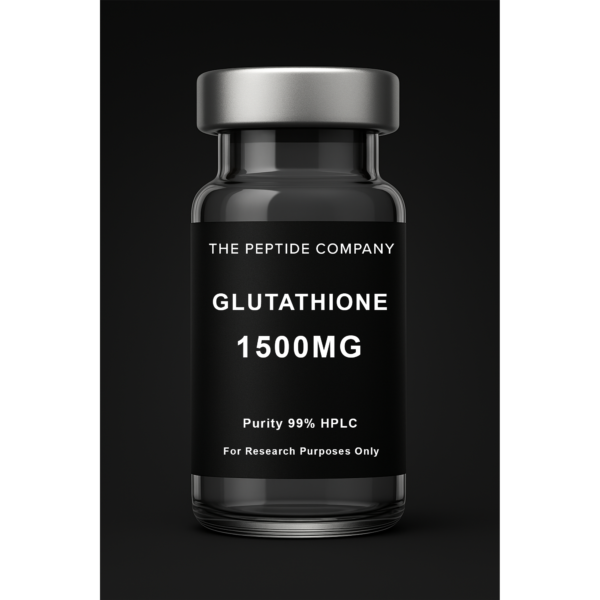
Glutathione 1500mg is a research compound studied for cellular redox balance, oxidative stress modulation, and detoxification pathway mechanisms. For research use only.