Introduction
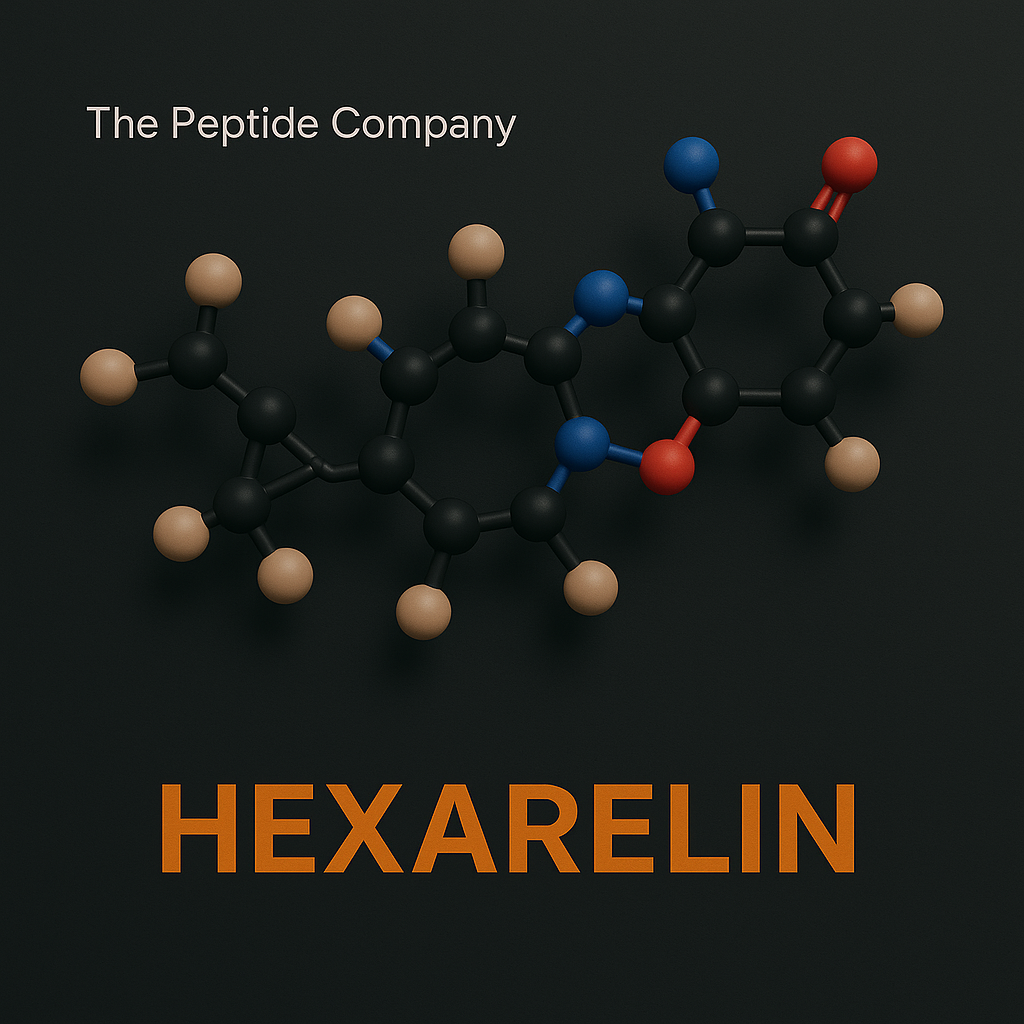
Hexarelin is a synthetic hexapeptide belonging to the growth hormone secretagogue (GHS) class. It is widely studied for its interaction with the growth hormone secretagogue receptor (GHS‑R1a) and its downstream signaling effects on endocrine, metabolic, and tissue‑repair pathways. Unlike endogenous growth hormone–releasing hormone, Hexarelin engages ghrelin‑related signaling mechanisms, making it a distinct tool for growth‑axis research.
Molecular Structure and Peptide Class
Hexarelin is composed of six amino acids arranged to optimize binding affinity for the GHS‑R1a receptor. Its compact structure confers resistance to rapid enzymatic degradation compared to native peptides. Research examines how structural modifications influence receptor activation kinetics, signaling bias, and downstream transcriptional effects.
Growth Hormone Secretagogue Receptor Biology
The GHS‑R1a receptor is a G‑protein–coupled receptor expressed in the pituitary, hypothalamus, cardiac tissue, skeletal muscle, and other peripheral tissues. Hexarelin binding activates Gq/11‑mediated signaling, leading to intracellular calcium mobilization, phospholipase C activation, and growth hormone pulse initiation in experimental models.
Endocrine Signaling and Growth Axis Research
Hexarelin is studied for its effects on the hypothalamic–pituitary axis, particularly its role in modulating growth hormone release patterns. Research investigates pulse amplitude, feedback regulation, and interactions with somatostatin signaling. These studies help clarify growth hormone dynamics independent of direct GHRH stimulation.
Cardiovascular and Myocardial Research
Beyond endocrine effects, Hexarelin is examined in cardiovascular research for its influence on myocardial signaling pathways. Studies explore interactions with cardiomyocyte survival mechanisms, calcium handling, and gene expression related to cardiac stress adaptation. These properties distinguish Hexarelin from other GHS compounds in tissue‑specific research contexts.
Metabolic and Tissue-Level Effects
Hexarelin research extends into metabolic regulation, including effects on lipid metabolism, energy balance, and insulin‑related signaling pathways. Tissue‑level studies examine its influence on skeletal muscle protein turnover, connective tissue signaling, and regenerative transcriptional programs.
Receptor Desensitization and Signaling Dynamics
Continuous exposure to GHS compounds can lead to receptor desensitization. Research on Hexarelin investigates receptor internalization, resensitization kinetics, and biased signaling profiles that differentiate acute versus chronic receptor engagement.
Summary
Hexarelin is a growth hormone secretagogue studied for its interaction with the GHS‑R1a receptor, its modulation of growth hormone signaling, and its broader tissue‑level effects on cardiovascular, metabolic, and regenerative pathways. Its distinct receptor dynamics and signaling profile make it a valuable compound in growth‑axis and integrative physiology research.
Educational & Research Disclaimer
This article is for educational and scientific research purposes only. No therapeutic claims or usage recommendations are provided. Compounds referenced are not approved for human use and are intended solely for controlled laboratory experimentation.
Hexarelin is a synthetic growth hormone secretagogue that activates the growth hormone secretagogue receptor (GHS-R), stimulating pulsatile GH release in experimental systems.
Unlike GHRH analogs that act directly on the pituitary, hexarelin works through GHS-R activation, influencing both hypothalamic and pituitary signaling.
Research shows hexarelin-induced GH release can secondarily influence IGF-1 signaling, depending on study duration and model.
Yes. Research explores cardiovascular, metabolic, and tissue-protective effects independent of GH release.
Hexarelin is examined for receptor binding, GH pulsatility, endocrine feedback loops, and comparative secretagogue potency.
Sermorelin: GHRH Fragment Research and Growth Hormone Pulsatility Models
IGF-1 Analogues: LR3 and DES Structural Variations and Receptor Binding in Research Models
CJC-1295: GHRH Analog, DAC Conjugation, and Growth Hormone Pulsatility in Research