Introduction
Nicotinamide adenine dinucleotide (NAD⁺) is a ubiquitous redox cofactor essential for cellular energy metabolism, mitochondrial function, and regulatory signaling. Beyond its classical role in oxidation–reduction reactions, NAD⁺ serves as a substrate for multiple enzyme families that govern DNA repair, chromatin remodeling, stress responses, and metabolic adaptation. As a result, NAD⁺ occupies a central position in modern cellular and mitochondrial research.
Chemical Structure and Redox Function
NAD⁺ consists of two nucleotides joined through their phosphate groups: one containing an adenine base and the other nicotinamide. The nicotinamide moiety undergoes reversible reduction to NADH, enabling electron transfer reactions. This NAD⁺/NADH redox couple is fundamental to glycolysis, the tricarboxylic acid cycle, and oxidative phosphorylation.
Role in Mitochondrial Energy Metabolism
Within mitochondria, NAD⁺ accepts electrons generated during the TCA cycle and delivers them to complex I of the electron transport chain via NADH. This process drives proton pumping, establishes the electrochemical gradient, and ultimately supports ATP synthesis. Research examines how compartmentalized NAD⁺ pools influence mitochondrial efficiency, redox balance, and adaptive responses to energetic stress.
NAD⁺-Consuming Enzymes
NAD⁺ functions not only as a redox cofactor but also as a consumable substrate for several enzyme families. Sirtuins (SIRT1–SIRT7) utilize NAD⁺ for deacetylation and ADP-ribosylation reactions that regulate gene expression, mitochondrial protein function, and stress resistance. Poly(ADP-ribose) polymerases (PARPs) consume NAD⁺ during DNA repair, linking NAD⁺ availability to genomic maintenance.
NAD⁺ and Chromatin Regulation
Through sirtuin activity, NAD⁺ levels influence chromatin structure and transcriptional programs. Research models show that NAD⁺-dependent deacetylation affects histones, transcription factors, and co-regulators, thereby coordinating metabolic state with gene expression. This positions NAD⁺ as a molecular bridge between metabolism and epigenetic control.
Cellular Stress, DNA Repair, and Redox Homeostasis
During oxidative or genotoxic stress, NAD⁺ consumption by PARPs increases to facilitate DNA repair. Excessive activation can deplete cellular NAD⁺ pools, disrupting energy metabolism. Research explores how cells balance NAD⁺ regeneration, redox homeostasis, and repair processes to maintain viability under stress.
NAD⁺ Salvage and Biosynthetic Pathways
Cells maintain NAD⁺ levels through de novo synthesis and salvage pathways. The salvage pathway recycles nicotinamide into NAD⁺ via intermediates such as NMN, coordinated by enzymes including NAMPT and NMNATs. Research focuses on how these pathways regulate intracellular NAD⁺ availability across nuclear, cytosolic, and mitochondrial compartments.
Systemic and Intercellular Signaling Roles
Beyond individual cells, NAD⁺ metabolism influences intercellular communication and systemic physiology. Studies examine extracellular NAD⁺ turnover, ectoenzyme activity, and the role of NAD⁺-derived metabolites in immune and inflammatory signaling. These findings expand the relevance of NAD⁺ beyond classical metabolism.
Summary
NAD⁺ is a central molecular hub integrating redox chemistry, mitochondrial energy production, DNA repair, chromatin regulation, and stress-response signaling. Its dual role as both a cofactor and a consumable substrate makes NAD⁺ a key determinant of cellular resilience and metabolic adaptation in advanced biological research.
Educational & Research Disclaimer
This article is for educational and scientific research purposes only. No therapeutic claims or usage recommendations are provided. Compounds referenced are not approved for human use and are intended solely for controlled laboratory experimentation.
What is NAD⁺ in research models?
NAD⁺ (nicotinamide adenine dinucleotide) is an essential redox cofactor that supports cellular energy metabolism and acts as a substrate for enzymes involved in DNA repair and gene regulation.
How does NAD⁺ support cellular energy production?
NAD⁺ shuttles electrons in glycolysis and the TCA cycle, enabling oxidative phosphorylation and ATP generation through mitochondrial respiration.
What’s the difference between NAD⁺ and NADH?
NAD⁺ is the oxidized form and NADH is the reduced form. The NAD⁺/NADH ratio is a core indicator of cellular redox state and metabolic flux.
Why is NAD⁺ linked to sirtuins and longevity pathways?
Sirtuins use NAD⁺ to regulate protein deacetylation, influencing mitochondrial biogenesis, stress responses, and metabolic adaptation in research systems.
How is NAD⁺ regulated inside cells?
Cells maintain NAD⁺ through biosynthesis and salvage pathways (notably from nicotinamide), while enzymes like CD38 and PARPs consume NAD⁺ during signaling and repair processes.
How is NAD⁺ typically measured in lab studies?
Common approaches include LC–MS/MS quantification, enzymatic cycling assays, and paired measurement of NAD⁺/NADH to assess redox balance.
Is NAD⁺ itself a peptide?
No. NAD⁺ is a nucleotide-derived coenzyme, not a peptide—though it’s often discussed alongside bioactive molecules studied for cellular optimization.
MOTS-c: The Mitochondrial-Encoded Peptide for Metabolic Regulation and Cellular Resilience
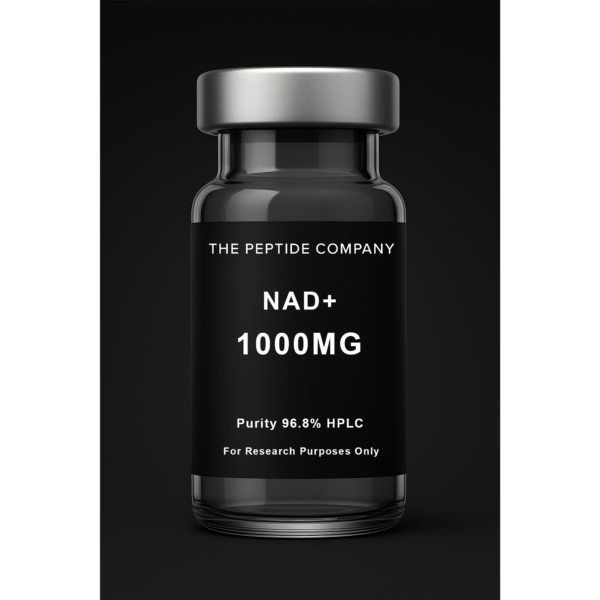
NAD+ 1000mg is a research compound studied for cellular energy metabolism, redox balance, mitochondrial function, and sirtuin-associated signaling pathways. For research use only.