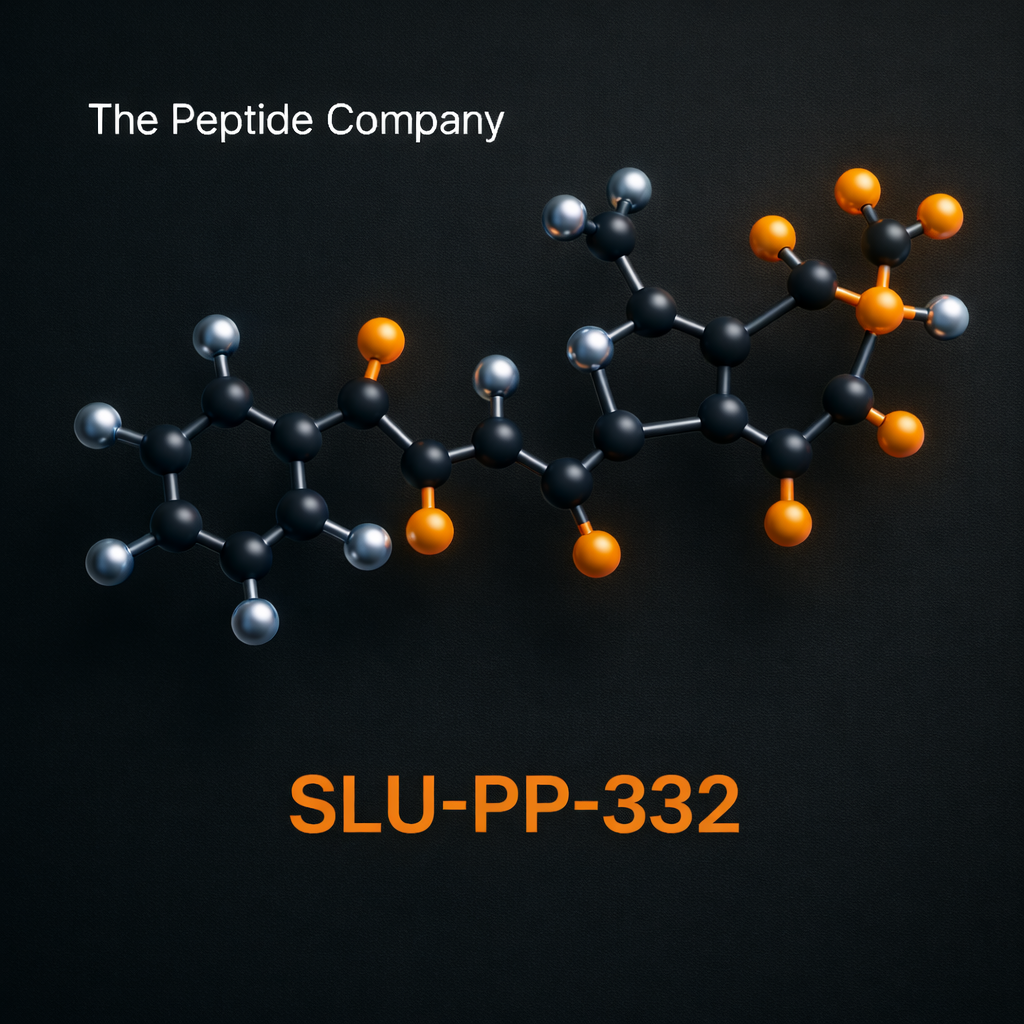
Introduction
SLU‑PP‑332 is a synthetic small‑molecule agonist of estrogen‑related receptors (ERRs), primarily ERRα and ERRγ, developed as a research tool to study mitochondrial oxidative metabolism and exercise‑mimetic transcriptional programs. Unlike compounds that activate AMPK directly, SLU‑PP‑332 operates at the nuclear receptor level, driving coordinated expression of genes involved in oxidative phosphorylation, fatty‑acid oxidation, and mitochondrial biogenesis.
Estrogen‑Related Receptors: ERRα and ERRγ
ERRα and ERRγ are orphan nuclear receptors that regulate cellular energy metabolism. They are highly expressed in tissues with high oxidative demand, including skeletal muscle, cardiac muscle, and brown adipose tissue. ERRs function as transcriptional regulators by binding to estrogen‑related response elements (ERREs) in the promoters of metabolic genes.
Mechanism of Action of SLU‑PP‑332
SLU‑PP‑332 binds to ERRα and ERRγ, stabilizing their active conformations and enhancing transcriptional activity. This activation promotes expression of mitochondrial genes involved in electron transport chain function, fatty‑acid β‑oxidation, and tricarboxylic acid cycle flux. Research distinguishes this mechanism from energy‑stress‑based activation pathways such as AMPK.
Mitochondrial Oxidative Metabolism
ERR activation by SLU‑PP‑332 leads to upregulation of genes encoding components of oxidative phosphorylation, including complexes I–V of the electron transport chain. Studies examine increases in mitochondrial respiration, ATP generation efficiency, and oxidative capacity in skeletal muscle and cardiac research models.
Exercise‑Mimetic Transcriptional Programs
SLU‑PP‑332 is widely studied as an exercise mimetic due to its ability to induce transcriptional programs associated with endurance training. Research explores overlaps with exercise‑induced gene expression, including pathways regulated by PGC‑1α, NRF1, and mitochondrial transcription factor A (TFAM).
Fatty‑Acid Oxidation and Metabolic Flexibility
Activation of ERRs enhances expression of enzymes involved in fatty‑acid transport and oxidation. Research examines how SLU‑PP‑332 influences metabolic substrate selection, favoring lipid utilization over glycolysis in oxidative tissues.
Skeletal Muscle and Cardiac Research
In skeletal muscle models, SLU‑PP‑332 is used to study endurance capacity, oxidative fiber programming, and mitochondrial density. Cardiac research focuses on its effects on myocardial energy metabolism, contractile efficiency, and resistance to metabolic stress.
Comparative Signaling Context
SLU‑PP‑332‑mediated ERR activation is mechanistically distinct from AMPK‑dependent pathways triggered by AICAR or energy depletion. Research highlights how ERR agonism can drive oxidative programs without inducing catabolic stress responses associated with ATP depletion.
Research Limitations and Specificity
As a synthetic ERR agonist, SLU‑PP‑332 is used exclusively in controlled experimental systems. Studies emphasize tissue specificity, receptor subtype selectivity, and dose‑dependent transcriptional outcomes when interpreting results. Off‑target nuclear receptor interactions remain an area of active investigation.
Summary
SLU‑PP‑332 is a powerful research compound for studying estrogen‑related receptor biology, mitochondrial oxidative metabolism, and exercise‑mimetic transcriptional programs. By acting at the level of nuclear receptor signaling, it provides unique insights into metabolic remodeling and endurance‑associated gene regulation.
Educational & Research Disclaimer
This article is for educational and scientific research purposes only. No therapeutic claims or usage recommendations are provided. Compounds referenced are not approved for human use and are intended solely for controlled laboratory experimentation.
SLU-PP-332 is a synthetic small-molecule agonist of estrogen-related receptors (ERRs), primarily ERRα and ERRγ. It is used in research to study mitochondrial oxidative metabolism and transcriptional programs associated with energy expenditure.
SLU-PP-332 activates estrogen-related receptors, which are nuclear transcription factors that regulate genes involved in mitochondrial biogenesis, oxidative phosphorylation, and fatty-acid oxidation. This activation shifts cellular metabolism toward increased oxidative capacity.
ERR activation by SLU-PP-332 induces transcriptional profiles similar to those observed during endurance exercise, including enhanced mitochondrial function and oxidative metabolism, without requiring mechanical muscle contraction.
Research using SLU-PP-332 often focuses on ERRα/ERRγ signaling, mitochondrial oxidative phosphorylation, fatty-acid utilization, and coordination with downstream metabolic regulators such as PGC-1α.
No. Despite the name, estrogen-related receptors do not bind estrogen. ERRs are orphan nuclear receptors that regulate energy metabolism independently of classical estrogen signaling.
No. SLU-PP-332 is not a peptide. It is a small-molecule compound designed to selectively activate estrogen-related receptors.
SLU-PP-332 has been studied in cellular systems and animal models to examine mitochondrial metabolism, exercise-mimetic gene expression, and systemic energy regulation.
SLU-PP-332 is a research compound and is not approved for clinical or therapeutic use. Its applications remain experimental.
Mazdutide : Dual GLP‑1 and Glucagon Receptor Activation in Metabolic and Lipid Regulation Research
AICAR : AMPK Activation, Cellular Energy Sensing, and Exercise‑Mimetic Signaling in Research Models
Apelin : APJ Receptor Signaling, Cardiovascular Regulation, and Metabolic Research Pathways
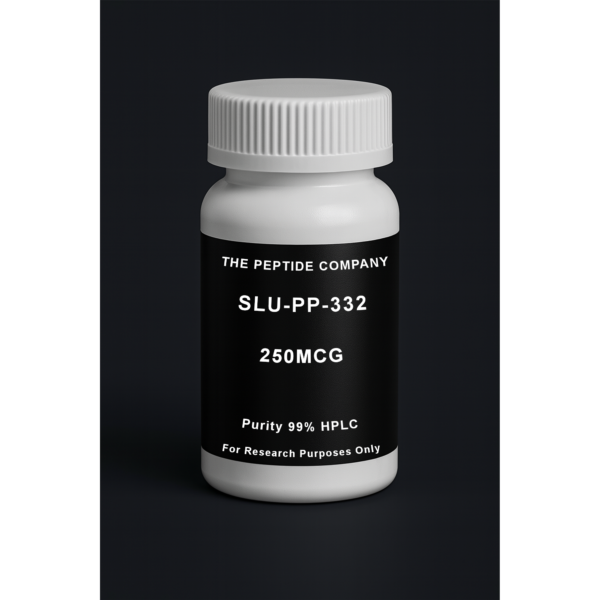
SLU-PP-332 250mcg is a research compound studied for ERR signaling, mitochondrial biogenesis pathways, and exercise-mimetic metabolic mechanisms. For research use only.