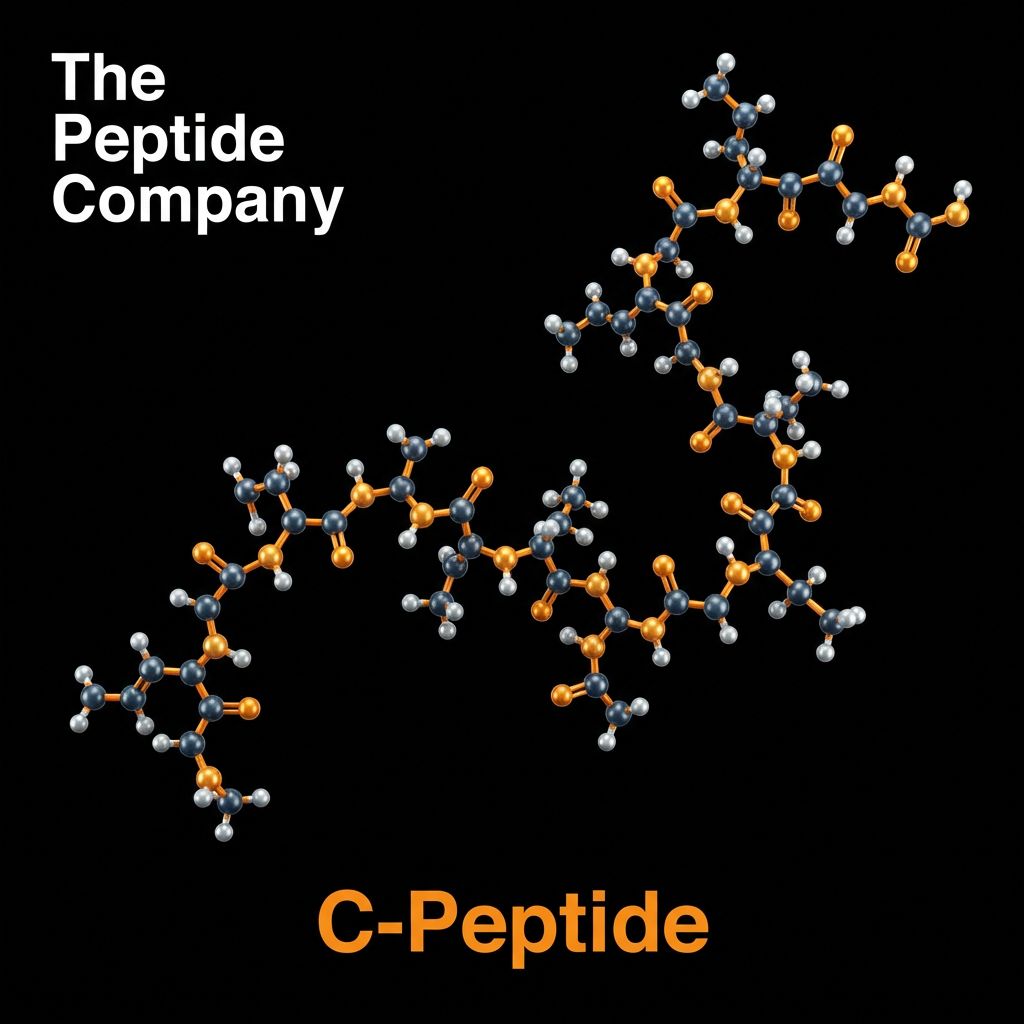
C-peptide (connecting peptide) is a 31-amino acid polypeptide that is secreted from pancreatic beta cells in equimolar amounts with insulin. Discovered in 1967 by Donald Steiner, C-peptide was initially considered biologically inert, serving merely as a structural linker facilitating the correct folding of proinsulin into its bioactive tertiary structure. For decades, its clinical utility was limited to its role as a diagnostic biomarker for endogenous insulin secretion, given its negligible hepatic extraction and longer half-life compared to insulin. However, this paradigm has shifted dramatically over the last twenty years.
Extensive research has now elucidated that C-peptide is a bioactive peptide with specific physiological effects, particularly regarding microvascular function and nerve integrity. In patients with type 1 diabetes, the complete absence of C-peptide contributes to the development of long-term complications such as nephropathy, neuropathy, and retinopathy. Studies demonstrate that C-peptide replacement in diabetic animal models and human trials ameliorates these complications by targeting intracellular signaling pathways distinct from those activated by insulin. Specifically, C-peptide has been shown to stimulate Na+/K+-ATPase activity, enhance endothelial nitric oxide synthase (eNOS) transcription, and activate the MAPK signaling cascade.
The recognition of C-peptide as a hormone in its own right has opened new avenues for therapeutic research. It represents a missing link in the physiological replacement of beta-cell secretory products. While insulin therapy addresses glycemic control, it does not correct the signaling deficits caused by C-peptide deficiency. Current investigation is focused on understanding the molecular mechanisms of C-peptide action, identifying its putative G-protein coupled receptor (GPCR), and determining its potential role in preventing or reversing the devastating microvascular sequelae of diabetes mellitus.
MOLECULAR STRUCTURE AND PROINSULIN PROCESSING
C-peptide is generated during the proteolytic processing of proinsulin within the secretory granules of pancreatic beta cells. The proinsulin molecule consists of the B-chain, the C-peptide linker, and the A-chain. The 31-amino acid sequence of human C-peptide (Glu-Ala-Glu-Asp-Leu-Gln-Val-Gln-Leu-Pro-Gly-Gly-Pro-Gly-Ser-Pro-Gln-Asp-Leu-Leu-Arg-Thr-Val-Glu-Gly-Leu-Ala-Gln-Glu) connects the C-terminus of the B-chain to the N-terminus of the A-chain, ensuring the formation of proper disulfide bonds.
“The primary function of the C-peptide domain within the proinsulin molecule is to facilitate the correct folding architecture, allowing the cysteines of the A and B chains to align for disulfide bridge formation. Once this conformation is achieved, specific endopeptidases (PC1/3 and PC2) cleave the C-peptide at dibasic residues. The resulting products—mature insulin and free C-peptide—are stored in hexameric crystals stabilized by zinc ions. Upon glucose stimulation, these granules undergo exocytosis, releasing insulin and C-peptide into the portal circulation in a 1:1 molar ratio. While 50% of insulin is extracted by the liver during the first pass, C-peptide undergoes negligible hepatic clearance, making peripheral C-peptide levels a more accurate reflection of beta-cell secretory activity.” (1)
The structural integrity of C-peptide is highly conserved among mammalian species, particularly in the N-terminal and C-terminal regions, suggesting functional importance beyond structural scaffolding. The presence of specific acidic residues allows C-peptide to interact with cell membranes, a property critical for its biological activity. Furthermore, its co-secretion with zinc ions has implications for amyloid formation and oligomerization, which are relevant to islet pathology in type 2 diabetes.
“Unlike insulin, which has a circulatory half-life of 3-5 minutes, C-peptide persists in plasma for approximately 20-30 minutes. This pharmacokinetic difference is attributed to the fact that C-peptide is primarily cleared by the kidneys rather than the liver. In research settings, this property allows C-peptide to serve as a stable surrogate marker for insulin release, particularly in patients treated with exogenous insulin where endogenous insulin levels are obscured. More importantly, this longer residence time may allow C-peptide to exert sustained signaling effects on peripheral tissues, particularly the renal endothelium and nerve fibers.” (2)
G-PROTEIN COUPLED RECEPTOR BINDING AND INTRACELLULAR SIGNAL TRANSDUCTION
The mechanism by which C-peptide exerts its biological effects has been a subject of intense debate. While a specific C-peptide receptor has not been fully cloned, substantial evidence points to a specific G-protein coupled receptor (GPCR) mechanism. Binding studies on human cell membranes indicate saturable, high-affinity binding sites specific for C-peptide, distinct from the insulin and IGF-1 receptors.
“The specific binding of C-peptide to cell membranes exhibits characteristics typical of a ligand-receptor interaction, including stereospecificity and saturability. Signal transduction studies reveal that C-peptide binding elicits a pertussis toxin-sensitive release of intracellular Ca2+ from thapsigargin-sensitive stores, implicating a Gαi/o-linked GPCR pathway. This calcium mobilization is crucial for the subsequent activation of endothelial nitric oxide synthase (eNOS) and the upregulation of Na+/K+-ATPase activity. Unlike insulin, which signals primarily through tyrosine kinase phosphorylation, C-peptide’s effects are mediated through allosteric modulation of membrane enzymes and specific transcription factors.” (3)
Downstream of receptor binding, C-peptide activates the mitogen-activated protein kinase (MAPK) signaling pathway, specifically ERK1/2 and JNK. This leads to the transcriptional regulation of genes involved in cell survival and growth. Furthermore, the interaction between C-peptide and the Na+/K+-ATPase pump is of paramount importance. In diabetic tissues, the activity of this pump is significantly depressed, leading to sodium retention, cellular swelling, and reduced nerve conduction velocity. C-peptide restores physiological pump function.
“In renal tubule cells, C-peptide has been shown to stimulate Na+/K+-ATPase activity in a dose-dependent manner within the physiological concentration range. This activation is prevented by specific inhibitors of protein kinase C (PKC) and protein phosphatase 2B (calcineurin), suggesting a complex phosphorylation-dependent regulatory mechanism. By restoring sodium-potassium balance, C-peptide prevents the metabolic abnormalities associated with hyperglycemia-induced enzyme dysfunction. Moreover, the peptide stimulates the expression of transcription factors such as ATF3 and COX-2, which are involved in cytoprotection and inflammatory modulation.” (3)
MICROVASCULAR AND ENDOTHELIAL EFFECTS IN DIABETIC NEPHROPATHY
Diabetic nephropathy is characterized by glomerular hyperfiltration, endothelial dysfunction, and eventual renal failure. C-peptide has emerged as a potential renoprotective agent. In type 1 diabetic models, C-peptide administration prevents or reverses glomerular hyperfiltration and reduces albuminuria, the hallmark of kidney damage. These effects are mediated largely through the modulation of endothelial nitric oxide (NO) production and the regulation of vascular tone.
“In streptozotocin-induced diabetic rats, C-peptide replacement therapy significantly attenuated glomerular hypertrophy and prevented the development of microalbuminuria. Mechanistically, C-peptide was found to normalize the expression of eNOS in the afferent arterioles, thereby restoring the delicate balance of glomerular hemodynamics. In the absence of C-peptide, the diabetic kidney exhibits an impaired ability to dilate in response to physiological stimuli. Treatment with C-peptide restores this vasodilatory capacity, reducing intraglomerular pressure and preventing the sclerosis that leads to permanent kidney damage. Clinical studies in type 1 diabetic patients confirm these findings, showing reduced glomerular filtration rates (from hyperfiltration levels) and decreased urinary albumin excretion after 3 months of C-peptide supplementation.” (4)
The interaction of C-peptide with the renal endothelium extends to the prevention of vascular permeability. High glucose levels increase the permeability of the glomerular filtration barrier, allowing proteins to leak into the urine. C-peptide tightens endothelial junctions by preventing the degradation of VE-cadherin and preventing cytoskeletal rearrangement induced by VEGF signaling.
“C-peptide prevents the hyperglycemia-induced upregulation of reactive oxygen species (ROS) in endothelial cells, a key driver of vascular dysfunction. By suppressing NAD(P)H oxidase activity and restoring mitochondrial membrane potential, C-peptide protects the renal vasculature from oxidative stress. Furthermore, it inhibits the expression of adhesion molecules such as ICAM-1 and VCAM-1, reducing the infiltration of inflammatory leukocytes into the renal parenchyma. These anti-inflammatory and antioxidant actions complement its hemodynamic effects, offering a multi-faceted approach to nephroprotection that insulin alone cannot provide.” (4)
NEUROPROTECTIVE EFFECTS AND PERIPHERAL NERVE FUNCTION
Diabetic peripheral neuropathy (DPN) affects up to 50% of diabetic patients, causing pain, sensory loss, and susceptibility to foot ulcers. The etiology involves metabolic flux, reduced endoneurial blood flow, and neurotrophic factor deficiency. C-peptide has demonstrated remarkable neuroprotective properties in research models, improving nerve conduction velocity (NCV) and preventing structural degeneration of nerve fibers.
“Experimental studies in the BB/Wor rat, a model of autoimmune type 1 diabetes, demonstrated that C-peptide replacement prevented the characteristic slowing of nerve conduction velocity and the development of thermal hyperalgesia. The underlying mechanism involves the correction of the Na+/K+-ATPase defect in the nerve membrane, which is essential for maintaining the resting potential and propagation of action potentials. Additionally, C-peptide treatment significantly increased endoneurial blood flow, correcting the neural ischemia that contributes to axonal degeneration. Morphometric analysis revealed that C-peptide prevented the atrophy of myelinated fibers and the degeneration of the paranodal apparatus, preserving the structural integrity of the peripheral nerve.” (5)
Beyond metabolic and vascular correction, C-peptide exhibits direct neurotrophic support. It upregulates the expression of insulin-like growth factor 1 (IGF-1) and nerve growth factor (NGF), both critical for neuronal survival and repair. The peptide also prevents apoptosis in neuroblastoma cells exposed to high glucose, suggesting a direct cytoprotective effect on neural tissue.
“In clinical trials involving patients with early-stage diabetic neuropathy, C-peptide administration for 3 to 12 months resulted in significant improvements in sensory nerve conduction velocities and vibration perception thresholds compared to placebo. These functional improvements correlated with increased Na+/K+-ATPase activity in erythrocytes, serving as a surrogate for neural enzyme function. Unlike symptomatic treatments for neuropathic pain, C-peptide appears to address the underlying pathophysiology of nerve damage, promoting repair and regeneration rather than merely masking symptoms. The reversal of structural abnormalities, such as axonal dwindling and demyelination, underscores its potential as a disease-modifying therapy for DPN.” (5)
ANTI-INFLAMMATORY AND ANTI-APOPTOTIC SIGNALING
Chronic low-grade inflammation and cellular apoptosis are central to the pathogenesis of diabetic complications. C-peptide exerts potent anti-inflammatory effects by modulating nuclear transcription factors. In endothelial cells and monocytes, physiological concentrations of C-peptide suppress the activation of Nuclear Factor-kappa B (NF-κB), thereby reducing the transcription of pro-inflammatory cytokines and chemokines.
“C-peptide treatment of human aortic endothelial cells significantly reduced the TNF-α-induced surface expression of cell adhesion molecules (VCAM-1 and E-selectin) and decreased the secretion of interleukin-8 (IL-8) and monocyte chemoattractant protein-1 (MCP-1). This anti-inflammatory action was associated with reduced phosphorylation of the NF-κB inhibitor IκBα, preventing nuclear translocation of the p65 subunit. By dampening endothelial inflammation, C-peptide attenuates the recruitment of monocytes to the vessel wall, a critical early step in the development of atherosclerosis. Additionally, C-peptide reduces the expression of the receptor for advanced glycation end-products (RAGE), limiting the deleterious effects of AGEs accumulation.” (6)
At the cellular level, C-peptide protects against apoptosis induced by hyperglycemia and oxidative stress. It shifts the balance of Bcl-2 family proteins toward survival, increasing the expression of anti-apoptotic Bcl-2 while decreasing pro-apoptotic Bax. This cytoprotection is particularly evident in renal tubular cells and endothelial progenitor cells, which are vital for vascular repair.
“In high-glucose conditions, endothelial cells undergo apoptosis via the activation of caspase-3. C-peptide supplementation completely abolishes this glucose toxicity, restoring cell viability to control levels. This effect is mediated through the PI3K/Akt pathway, leading to the inactivation of Bad and the upregulation of Bcl-2. Furthermore, C-peptide preserves mitochondrial membrane potential and prevents the release of cytochrome c into the cytosol. By inhibiting the intrinsic apoptotic pathway, C-peptide preserves the functional mass of endothelial and tubular cells, maintaining tissue architecture in the face of metabolic stress.” (6)
C-PEPTIDE AS A BIOMARKER OF PANCREATIC BETA CELL RESERVE
While its therapeutic role is being established, C-peptide remains the gold standard biomarker for assessing residual beta-cell function. Its measurement is critical for distinguishing between type 1 diabetes (absolute deficiency) and type 2 diabetes (insulin resistance with relative deficiency/hyperinsulinemia). The stability of C-peptide in blood and urine allows for accurate quantification of endogenous insulin secretion, unconfounded by exogenous insulin administration.
“The Mixed Meal Tolerance Test (MMTT) is the preferred method for assessing stimulated C-peptide response in clinical research. Following a standardized liquid meal, C-peptide levels are measured over a 2-4 hour period. In type 1 diabetes, stimulated C-peptide levels of <0.2 nmol/L typically indicate complete beta-cell failure, while levels >0.6 nmol/L suggest significant residual function. Recent research from the DCCT/EDIC study has shown that even minimal residual C-peptide secretion (responders) is associated with a significantly reduced risk of severe hypoglycemia and microvascular complications compared to non-responders. This highlights the protective biological activity of endogenous C-peptide, even at low levels.” (7)
The measurement of fasting C-peptide and the C-peptide-to-glucose ratio provides valuable prognostic information. In type 2 diabetes, elevated C-peptide levels can indicate insulin resistance and metabolic syndrome. Conversely, a progressive decline in C-peptide over time signals beta-cell exhaustion and the eventual need for insulin therapy. Accurate phenotyping using C-peptide allows for personalized treatment strategies and better stratification in clinical trials.
COMPARATIVE ANALYSIS: C-PEPTIDE VS INSULIN IN METABOLIC RESEARCH
The historical view of C-peptide as an inert byproduct stemmed from early bioassays that failed to detect an effect on glucose lowering. Unlike insulin, C-peptide does not directly stimulate glucose uptake in muscle or adipose tissue. Its actions are distinct and complementary to insulin. While insulin is the primary regulator of fuel metabolism (glucose, lipids, proteins), C-peptide appears to function as a regulator of microvascular integrity and membrane transport enzymes.
“Comparative metabolic studies reveal a fundamental divergence in physiological roles. Insulin lowers blood glucose by translocating GLUT4 transporters; C-peptide has no effect on GLUT4 or acute glycemic control. However, C-peptide markedly improves blood flow to skeletal muscle and skin, potentially enhancing substrate delivery for insulin action. Furthermore, while insulin can promote sodium retention and sympathetic activation, C-peptide activates the Na+/K+-ATPase pump, counteracting these effects. The synergistic relationship is evident in pump function: insulin translocates the pump subunits to the membrane, while C-peptide increases the pump’s catalytic turnover rate. This dual regulation ensures optimal ion homeostasis, which is disrupted when insulin is administered without C-peptide.” (8)
The difference in pharmacokinetics is also crucial. The longer half-life of C-peptide allows for more stable plasma concentrations compared to the pulsatile and rapid clearance of insulin. This stability may be essential for tonic signaling to endothelial cells. In the physiological state, tissues are exposed to both hormones simultaneously; in type 1 diabetes treated with insulin alone, the absence of C-peptide leaves a signaling void that contributes to vascular and neural pathology.
RESEARCH MODELS AND TRANSLATIONAL CONSIDERATIONS
The translation of C-peptide research from animal models to human therapy faces several challenges. While rodent models consistently show benefits, the optimal dosing strategy and delivery method for humans remain under investigation. Most studies use short-acting C-peptide injections, but the short half-life requires frequent administration or continuous infusion to maintain physiological levels. The development of long-acting C-peptide analogs (such as PEGylated C-peptide) is a current research priority.
“Translational barriers include the need for sustained delivery systems. In early phase clinical trials, subcutaneous infusion of C-peptide for 1-3 months improved renal and nerve function, but the effects reversed upon cessation of therapy. This indicates that C-peptide acts as a replacement hormone rather than a curative agent. Furthermore, the variability in receptor expression among individuals may influence therapeutic efficacy. Current research is focused on identifying the specific GPCR responsible for C-peptide binding, which would facilitate the development of small-molecule agonists with improved pharmacokinetic properties. Despite these hurdles, the robust body of evidence supports the concept that type 1 diabetes is a dual-hormone deficiency disease, and that restoration of C-peptide signaling is essential for comprehensive metabolic correction.” (8)
SOURCED STUDIES
(1) Steiner, D.F., et al. “The biosynthesis of insulin and the structure of the proinsulin molecule.” Diabetes, vol. 17, no. 12, 1968, pp. 725-736. DOI: 10.2337/diab.17.12.725.
(2) Wahren, J., et al. “Role of C-peptide in human physiology.” American Journal of Physiology-Endocrinology and Metabolism, vol. 278, no. 5, 2000, pp. E759-E768. DOI: 10.1152/ajpendo.2000.278.5.E759.
(3) Zhong, Z., et al. “C-peptide stimulates Na+,K+-ATPase via activation of ERK1/2 MAP kinase in human renal tubular cells.” Diabetologia, vol. 48, no. 1, 2005, pp. 187-197. DOI: 10.1007/s00125-004-1606-5.
(4) Nordquist, L., et al. “Proinsulin C-peptide prevents nephropathy in diabetic rats via modulation of glomerular hemodynamics and endothelial function.” Kidney International, vol. 74, no. 5, 2008, pp. 646-655. DOI: 10.1038/ki.2008.232.
(5) Sima, A.A., et al. “C-peptide prevents and improves chronic type I diabetic polyneuropathy in the BB/Wor rat.” Diabetologia, vol. 44, no. 7, 2001, pp. 889-897. DOI: 10.1007/s001250100570.
(6) Luppi, P., et al. “C-peptide down-regulates the expression of the inflammatory chemokine MCP-1 in human aortic endothelial cells.” Cellular and Molecular Life Sciences, vol. 65, no. 13, 2008, pp. 2063-2070. DOI: 10.1007/s00018-008-8120-2.
(7) Lachin, J.M., et al. “Effect of glycemic exposure on the risk of microvascular complications in the diabetes control and complications trial revisited.” Diabetes, vol. 57, no. 4, 2008, pp. 995-1001. DOI: 10.2337/db07-1618.
(8) Wahren, J., et al. “C-peptide: new findings and therapeutic implications.” Diabetes & Metabolism, vol. 41, no. 5, 2015, pp. 359-370. DOI: 10.1016/j.diabet.2015.06.002.
Research Disclaimer: The information presented in this article is provided solely for scientific, educational, and laboratory reference purposes. The content is based on published peer-reviewed research and is intended to describe the pharmacological properties and physiological effects of C-Peptide in experimental models. Any products or materials referenced are intended exclusively for in-vitro laboratory research use and are not intended for human or animal use, including diagnosis, treatment, mitigation, or prevention of any disease. No content herein should be construed as medical, clinical, or therapeutic guidance.
C-peptide is a 31–amino acid peptide released during the cleavage of proinsulin into insulin and C-peptide within pancreatic beta cells.
It is used as a marker of endogenous insulin production and is studied for its role in glucose metabolism and pancreatic function in experimental models.
Yes, research suggests C-peptide may influence microvascular blood flow, cellular signaling pathways, and tissue function in certain models.
It is studied in pathways related to insulin signaling, endothelial function, Na⁺/K⁺-ATPase activity, and microvascular regulation.
It helps differentiate endogenous insulin production from exogenous sources and is widely used to assess beta-cell function in research settings.
While insulin directly regulates glucose uptake, C-peptide is primarily used as a biomarker but is also being studied for independent signaling effects.
PMID:
16968891 — C-peptide and microvascular blood flow regulation
12716805 — Biological activity of C-peptide in cellular signaling
14578243 — C-peptide effects on endothelial function
15489345 — C-peptide and Na⁺/K⁺-ATPase activation
17510464 — Role of C-peptide in diabetic complications research
20388778 — C-peptide signaling mechanisms and pathways
21912164 — C-peptide in metabolic and vascular research
26692825 — Advances in C-peptide physiology and function
Semaglutide : GLP-1 Receptor Agonism, Incretin Signaling, and Metabolic Regulation
IGF-1 Analogues: LR3 and DES Structural Variations and Receptor Binding in Research Models
Pancreagen: Short Peptide Bioregulator for Pancreatic Tissue Research
KPV: The Anti-Inflammatory Tripeptide and Cellular Repair Mechanism