

Introduction
Oxytocin is a nonapeptide neurohormone synthesized primarily in the hypothalamus and released through the posterior pituitary. It functions as both a hormone and a neuromodulator, with research spanning social cognition, stress regulation, autonomic balance, immune signaling, and metabolic coordination. Due to its dual central and peripheral actions, oxytocin is a core molecule in neuroendocrine research.
Molecular Structure and Biosynthesis
Oxytocin is composed of nine amino acids with a characteristic disulfide bond that stabilizes its cyclic structure. It is synthesized as part of a larger precursor protein (prepro-oxytocin-neurophysin I) and processed through enzymatic cleavage. This structural configuration contributes to receptor specificity and signaling kinetics in research models.
Oxytocin Receptor Biology
The oxytocin receptor (OXTR) is a G-protein–coupled receptor expressed in the brain, heart, gastrointestinal tract, reproductive tissues, and immune cells. Activation of OXTR primarily couples to Gq/11 proteins, triggering phospholipase C signaling, intracellular calcium release, and downstream kinase cascades. Research also explores context-dependent coupling to Gi/o pathways.
Neural Circuitry and Social Cognition
Central oxytocin signaling is studied extensively in relation to social behavior, bonding, trust, emotional recognition, and affiliative processing. Research examines oxytocin’s influence on limbic structures including the amygdala, hippocampus, and prefrontal cortex, as well as its modulation of salience and reward networks.
Stress Response and Autonomic Regulation
Oxytocin interacts with stress-response systems by modulating hypothalamic–pituitary–adrenal (HPA) axis activity and autonomic nervous system balance. Research models show associations with reduced stress signaling, altered cortisol dynamics, and enhanced parasympathetic tone.
Immune and Inflammatory Pathways
Oxytocin receptors are expressed on various immune cells. Studies investigate oxytocin’s role in cytokine regulation, immune-cell migration, and neuroimmune communication. These pathways link oxytocin signaling to inflammatory balance and systemic stress responses.
Metabolic and Cardiovascular Research
Beyond neural effects, oxytocin is studied for its involvement in metabolic coordination and cardiovascular signaling. Research explores its influence on glucose regulation, lipid metabolism, vascular tone, and cardiac contractility, highlighting its role as a systemic regulatory peptide.
Developmental and Reproductive Signaling
Oxytocin is well known for its role in reproductive biology, including parturition and lactation, but research also extends to developmental neurobiology. Studies examine how oxytocin signaling influences early-life neural circuit formation and long-term behavioral phenotypes.
Summary
Oxytocin is a multifunctional neuroendocrine peptide studied for its roles in social cognition, stress modulation, immune signaling, metabolic regulation, and cardiovascular biology. Its widespread receptor distribution and context-dependent signaling make it a central molecule in integrative physiology and neuroscience research.
Educational & Research Disclaimer
This article is for educational and scientific research purposes only. No therapeutic claims or usage recommendations are provided. Compounds referenced are not approved for human use and are intended solely for controlled laboratory research.
PMID:
- PMID: 10983204 – Oxytocin as a central neuromodulator
- PMID: 16123301 – Oxytocin and social behavior signaling
- PMID: 17666521 – Oxytocin receptor distribution and function
- PMID: 23665558 – Oxytocin in stress and autonomic regulation
- PMID: 31289336 – Neuroendocrine and systemic effects of oxytocin
FAQs
What is oxytocin in research models?
Oxytocin is a nonapeptide neurohormone studied for its role in neuroendocrine signaling, social cognition, and systemic regulatory processes.
How does oxytocin function in the brain?
Oxytocin acts as a neuromodulator, influencing neuronal activity in regions associated with social behavior, stress processing, and emotional regulation.
What receptors does oxytocin act on?
Oxytocin binds to the oxytocin receptor (OXTR), a G-protein–coupled receptor expressed in both central and peripheral tissues.
Is oxytocin involved in stress and autonomic regulation?
Yes. Research indicates oxytocin modulates autonomic balance and interacts with stress-response pathways.
Is oxytocin studied outside of social behavior?
Yes. Research models examine oxytocin’s roles in immune signaling, metabolism, cardiovascular regulation, and neurodevelopment.
Related Searches:
Dihexa — Neurotrophic Peptide Research Article (Educational • Research Use Only)
Semax : ACTH(4–10)-Derived Heptapeptide and Neurotrophic Research Pathways

Overview
PT‑141 (bremelanotide) is a cyclic melanocortin receptor agonist derived from α‑MSH analog chemistry. It primarily targets MC4R (with some MC3R activity) within central neural circuits involved in sexual desire and arousal. Experimental and clinical programs have assessed outcomes in female sexual interest/arousal disorder (FSIAD/HSDD) and male erectile function research contexts.
Mechanism of Action (Research Context)
Through MC4R agonism in hypothalamic and limbic pathways, PT‑141 modulates pro‑sexual signaling and motivational states. Unlike agents that improve erection via peripheral nitric‑oxide vasodilation, PT‑141’s effects are centrally mediated, producing responses independent of endothelial function in some cohorts.
Potential Research Benefits (Reported in Literature)
• Desire/interest: Randomized, placebo‑controlled trials report that subjects experienced increased sexual desire and reductions in distress related to low desire.
• Arousal/response: Improvements in validated arousal metrics and satisfying sexual events were observed in selected cohorts; onset windows varied by format and protocol.
• Male erectile response (research contexts): Early studies described increased erectile rigidity and response; centrally mediated effects distinguished it from PDE‑5–based pathways.
• Quality‑of‑life: Several programs reported favorable shifts in patient‑reported outcomes aligned with desire/arousal domains.
• Central mechanism advantage: Activity via MC4R provides a mechanistic alternative where peripheral vasodilation is insufficient.
Potential Reported Side Effects / Adverse Events
The most common events reported by subjects include nausea, flushing, headache, and injection‑site reactions (for parenteral formats). Vomiting, dizziness, and fatigue have been reported; severity is dose‑related. Transient blood‑pressure increases and heart‑rate reductions were documented in controlled settings, leading protocols to exclude uncontrolled hypertension and to implement monitoring. Pigmentary changes are less frequent than with pigmentation‑focused analogs but have been described.
Reported Findings / Key Points
• MC4R‑driven central mechanism distinguishes PT‑141 from peripheral vasodilators.
• Placebo‑controlled data show improvements in desire/arousal outcomes among particular cohorts; effect sizes vary by study.
• Nausea is the most frequent adverse event; mitigation strategies in trials included timing and dose adjustments.
• Hemodynamic effects are typically transient but required protocolized screening/monitoring.
• Early intranasal work informed later subcutaneous programs.
Chemical / Physical Information
• Class: Cyclic heptapeptide melanocortin receptor agonist • Primary targets: MC4R > MC3R (CNS) • Representative sequence family: Nle‑c[Asp‑His‑D‑Phe‑Arg‑Trp‑Lys] (cyclized); terminal groups vary by analog/formulation • General handling (peptide guidance): store lyophilized material at −20 °C, protect from light/moisture; aliquot reconstituted solutions; avoid repeated freeze–thaw.
Notes on Formats Studied
PT‑141 has been explored using intranasal and subcutaneous formats in research. Dosing schedules, onset windows, and outcome measures differ across trials; interpret data within each protocol’s design and population.
Regulatory & Compliance Notes
PT‑141 has been evaluated within regulated frameworks for specific indications. Status, labeling, and risk information differ by jurisdiction and product. All activities should comply with applicable laws and institutional policies.
References (Selection)
• Randomized, placebo‑controlled trials in HSDD/FSIAD cohorts. • Early centrally acting melanocortin agonist studies in male erectile response. • MC4R pharmacology reviews detailing neural circuits of sexual motivation and arousal. • Safety profiles describing nausea, flushing, BP/HR effects, and post‑marketing observations.
Disclaimer
This is only intended for research purposes only. None of this is intended for human consumption. This is only for educational purposes.
—————————
Selected References
PMID: 12831768 — Melanocortin receptor pathways in sexual arousal and neuroregulation
PMID: 16098075 — Bremelanotide (PT-141) mechanisms and MCR agonism
PMID: 19699752 — Central melanocortin signaling and sexual function
PMID: 21198980 — Peptide-based modulation of libido and hypothalamic pathways
Frontiers in Endocrinology — Melanocortin system and neuroendocrine regulation
Journal of Sexual Medicine — Clinical evaluation of melanocortin agonists
FAQ:
What is PT-141 (Bremelanotide)?
PT-141, also known as Bremelanotide, is a melanocortin receptor agonist studied for its effects on sexual function pathways, particularly through MC3R and MC4R activity, in research models.
How does PT-141 work in research?
PT-141 is believed to act on central melanocortin receptors involved in arousal-related signaling, rather than directly affecting vascular nitric oxide pathways.
Is PT-141 approved for general consumer use?
Clinical formulations of Bremelanotide exist for specific indications, but the PT-141 discussed in research contexts is not intended for over-the-counter consumer use.
What are researchers investigating PT-141 for?
Research explores PT-141 in models of sexual function, central arousal signaling, and melanocortin-mediated pathways affecting behavior and autonomic responses.
How is PT-141 different from PDE5-focused compounds in research?
Unlike PDE5-focused agents that act mainly on vascular smooth muscle and nitric oxide, PT-141 targets central melanocortin receptors, allowing researchers to study upstream neural pathways.
How is PT-141 evaluated in studies?
PT-141 is assessed in preclinical and clinical research settings that monitor autonomic responses, self-reported endpoints, and melanocortin pathway activity.
Are there known side effects in PT-141 research?
Reported effects in studies can include nausea, flushing, or blood pressure changes, with details varying by dose, route, and protocol.
Related Research Compounds
Dihexa — Neurotrophic Peptide Research Article (Educational • Research Use Only)
Semax: ACTH(4–10)-Derived Heptapeptide and Neurotrophic Research Pathways
Overview
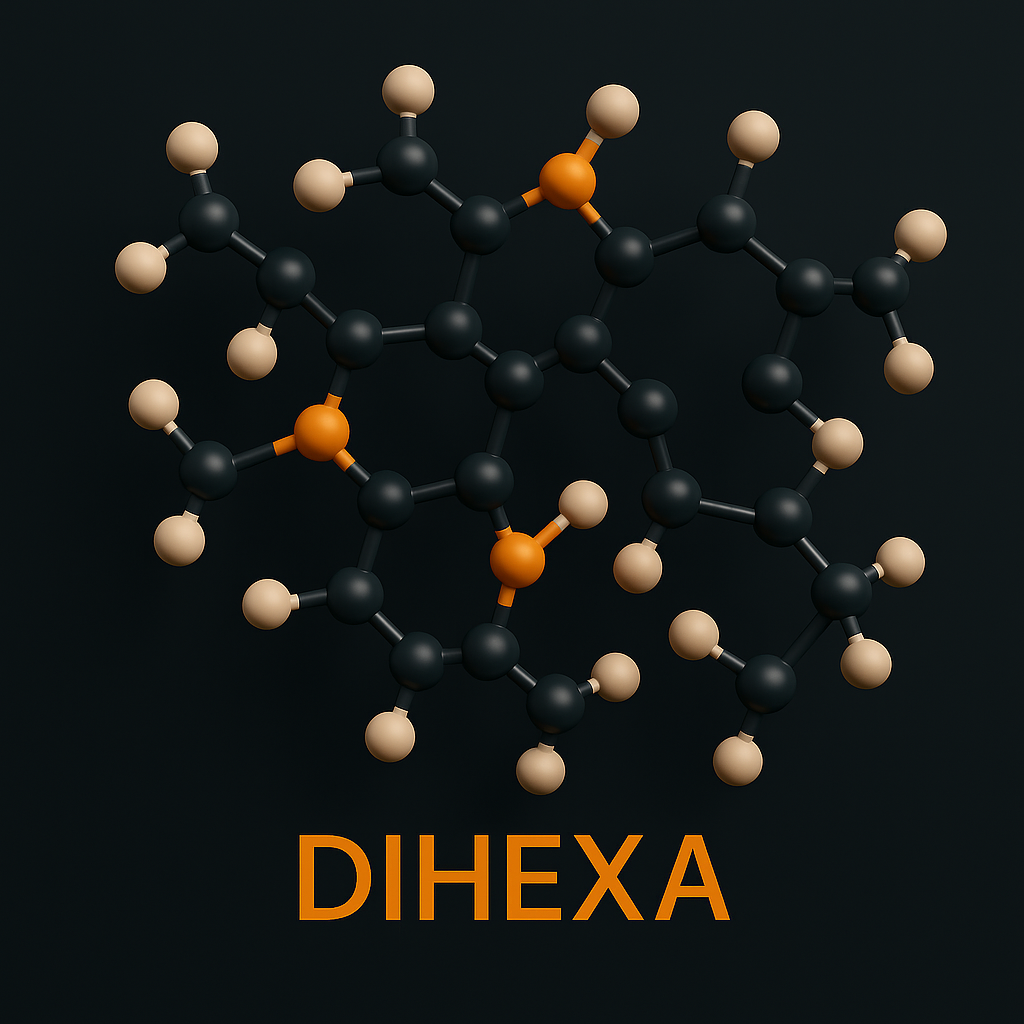
Dihexa (N-hexanoic-Tyr-Ile-(6) aminohexanoic amide) is a synthetic peptide derivative of Angiotensin IV, designed to study neurotrophic and cognitive-enhancing properties.
Developed by researchers at Washington State University, Dihexa was engineered to overcome limitations in stability and blood–brain-barrier permeability associated with native neuropeptides.
In research contexts, Dihexa has been shown to enhance synaptogenesis, neuronal connectivity, and cognitive performance in animal models, positioning it as a key compound of interest in neurodegenerative and regenerative neuroscience.
Mechanism of Action (Research Context)
Dihexa functions primarily through potentiation of the hepatocyte growth factor (HGF) and c-Met receptor signaling pathway.
This pathway is associated with neuronal survival, differentiation, and synaptic plasticity.
By enhancing the binding affinity between HGF and its receptor c-Met, Dihexa promotes downstream activation of key intracellular cascades, including PI3K/Akt and MAPK/ERK.
These cascades are critical regulators of neurogenesis, dendritic arborization, and synaptic repair.
In preclinical models, Dihexa has demonstrated robust synaptogenic activity, leading to the formation of new dendritic spines and restoration of synaptic density in hippocampal neurons.
This distinguishes Dihexa from traditional cognitive enhancers that modulate neurotransmitter signaling without structural neural regeneration.
Its lipid-soluble structure allows it to cross the blood–brain barrier efficiently, expanding its utility for central nervous system (CNS) research.
Potential Research Benefits (Reported in Literature)
• Promotes synaptogenesis and dendritic spine density in hippocampal neurons
• Enhances cognitive performance and memory retention in preclinical models
• Exhibits neuroprotective effects against oxidative and excitotoxic stress
• Supports neuronal survival and synaptic maintenance in neurodegenerative conditions
• Investigated for applications in Alzheimer’s disease, traumatic brain injury (TBI), and cognitive decline
• Activates HGF/c-Met signaling with low off-target activity in vitro
Selected Research Highlights
• Synaptic Plasticity: In vitro studies show that Dihexa increases synapse formation and improves functional connectivity within hippocampal networks.
• Cognitive Enhancement: Animal models demonstrate significant improvements in maze learning and object-recognition tasks, indicating enhanced long-term potentiation (LTP).
• Neuroprotection: Dihexa-treated neurons exhibit resistance to glutamate-induced excitotoxicity and oxidative damage.
• Regenerative Mechanism: Unlike acetylcholinesterase inhibitors or AMPA modulators, Dihexa repairs neuronal architecture rather than temporarily altering neurotransmission.
Chemical / Physical Information
• Chemical Name: N-hexanoic-Tyr-Ile-(6) aminohexanoic amide
• Molecular Formula: C₃₉H₆₆N₆O₆
• Molecular Weight: ~718.98 Da
• Appearance: White crystalline powder
• Solubility: Soluble in DMSO and ethanol; limited solubility in water
• Storage: Lyophilized powder should be stored at −20 °C, protected from light and moisture; reconstituted solutions should be aliquoted and frozen to prevent repeated freeze–thaw cycles.
Regulatory & Compliance Notes
Dihexa is not approved for therapeutic or clinical use by major regulatory agencies.
It is intended solely for research and laboratory applications.
Proper handling requires adherence to institutional biosafety protocols and compliance with relevant chemical-storage and documentation standards, including Certificates of Analysis (COA) and Material Safety Data Sheets (MSDS).
References (Selection)
- Benoist CC et al. (2014). The neurotrophic compound Dihexa enhances synaptogenesis and improves cognitive function. J Pharmacol Exp Ther.
- Wright JW, Harding JW. (2015). The brain angiotensin system and Dihexa in neuroregeneration. Front Neurosci.
- McCoy AT et al. (2013). HGF/c-Met-mediated synaptic plasticity and neuroprotection. Neuroscience.
- Wright JW et al. (2016). Angiotensin IV analogs as cognitive enhancers and neuroregenerative agents. Curr Med Chem.
- Chen Q et al. (2017). Peptide-based strategies targeting neurotrophic signaling for CNS repair. Brain Res Bull.
Disclaimer
This article is intended for educational and research purposes only.
Dihexa is not approved for human or veterinary use.
All experiments and studies must comply with institutional, ethical, and legal standards for peptide research and biosafety.
—————————
Selected References
PMID: 23995713 — Dihexa-induced synaptogenesis and cognitive enhancement
PMID: 18603278 — HGF/c-Met pathway activation in neural repair
PMID: 23727840 — Neurotrophic peptide mechanisms and synaptic plasticity
PMID: 29224772 — Peptide-based strategies for CNS regeneration
Frontiers in Neuroscience — Peptide modulation of memory and cognition
Journal of Peptide Science — Neuroactive peptides and brain repair mechanisms
FAQ:
What is Dihexa?
Dihexa is a small molecule derivative of angiotensin IV studied for its potential effects on synaptic formation, cognitive pathways, and neural repair in research environments.
How does Dihexa work in research models?
Dihexa is believed to enhance synaptic connectivity by modulating hepatocyte growth factor (HGF) and c-Met signaling, pathways associated with neuronal plasticity.
Is Dihexa approved for human use?
No. Dihexa is an experimental research compound and is not approved for medical, therapeutic, or consumer use.
What are researchers studying Dihexa for?
Research explores Dihexa for cognitive support, neuroplasticity, neural repair, memory enhancement, and models of neurodegenerative processes.
Does Dihexa cross the blood–brain barrier?
Preclinical findings indicate Dihexa may cross the blood–brain barrier efficiently, which is one reason it is highlighted in neural repair research.
Are there known side effects of Dihexa in studies?
Available research is limited, but some studies report no significant acute toxicity; however, long-term safety has not been established.
How is Dihexa typically evaluated in research?
Dihexa is studied in vitro and in animal models that monitor synaptic density, cognitive performance markers, and molecular signaling pathways.
Related Searches:
Semax: ACTH(4–10)-Derived Heptapeptide and Neurotrophic Research Pathways

Introduction
Semax is a synthetic heptapeptide derived from the endogenous immunomodulatory peptide Tuftsin. Its sequence, Met-Glu-His-Phe-Pro-Gly-Pro, was engineered for enhanced stability, resistance to enzymatic degradation, and improved neuromodulatory properties. Research explores Semax’s potential influence on neurotransmitter regulation, stress-response signaling, BDNF-associated pathways, immune–neural communication, and cognitive processing networks.
Structural Biology of Semax
Semax is structurally based on the ACTH(4–10) fragment but lacks corticosteroid-stimulating domains. The presence of histidine, phenylalanine, and proline residues contributes to receptor interactions, stability, and an extended duration of activity in research models. Its structural modifications reduce susceptibility to rapid degradation by proteases.
Neurotrophic Mechanisms
Semax appears in studies examining neurotrophic factor regulation, particularly brain-derived neurotrophic factor (BDNF) and neurotrophin-4 (NT‑4). These pathways support synaptic plasticity, neuronal resilience, and activity-dependent remodeling. Research also explores Semax’s influence on TrkB-mediated signaling cascades involved in long-term potentiation and memory.
Transcriptional and Gene Expression Effects
Transcriptomic studies show that Semax modulates genes associated with plasticity, metabolism, antioxidant defense, neurotransmitter signaling, synaptic remodeling, and immediate-early gene activity (e.g., c-Fos, Arc, Egr1). These transcriptional changes are commonly observed in cortical and hippocampal models.
Neuromodulatory Pathways
Research investigates Semax’s influence on dopaminergic, glutamatergic, and cholinergic systems. This includes dopamine turnover, D1/D2 receptor-related transcription, glutamate receptor subunit expression, excitatory/inhibitory balance, and cholinergic gene expression relevant to attention and learning.
Stress-Response and Cytoprotective Pathways
Semax is evaluated in models focused on oxidative stress resilience and cytoprotective gene expression. This includes effects on mitochondrial antioxidant pathways, superoxide dismutase activity, redox-sensitive transcription factors, and heat-shock proteins such as HSP70. Research also examines its relationship with CRF-related stress-adaptation pathways.
Neuroimmune and Microglial Signaling
Studies explore Semax’s influence on cytokine profiles (IL‑6, TNF‑α, interferon-related genes), microglial activation markers, and neuroimmune signaling loops. These interactions relate to neuroinflammation modulation and synaptic-environment stability.
Cortical Plasticity and Functional Pathways
Cortical models identify Semax as a regulator of activity-dependent gene expression, synaptic strengthening, ERK1/2 kinase cascades, neuronal excitability regulation, and learning-associated transcriptional patterns. These effects support research into long-term potentiation and cortical adaptation.
Summary
Semax is an ACTH(4–10)-derived heptapeptide examined for neuromodulatory and neurotrophic properties. Research highlights its influence on BDNF-related signaling, cortical gene expression, neurotransmitter modulation, oxidative-stress defense, synaptic plasticity, and neuroimmune pathways. Its structural stability and broad regulatory effects make it a key compound in advanced neurobiological research.
Educational & Research Disclaimer
This article is for educational and scientific research purposes only. No therapeutic claims or usage guidance is provided. Compounds referenced are not approved for human use and are intended solely for controlled laboratory experimentation.
PMID-Only References
PMID: 10582672 — ACTH-derived peptides and neurotrophic signaling
PMID: 15878694 — Peptide modulation of stress-response pathways
PMID: 17603017 — Cognitive and neuroprotective mechanisms in peptide models
PMID: 18403122 — Peptide influence on BDNF-associated responses
PMID: 20555078 — Neuroimmune and neuromodulatory peptides
FAQ:
What is Semax in research?
Semax is a synthetic heptapeptide derived from the ACTH(4–10) fragment and investigated for its influence on neurotrophic, neuroprotective, and neuromodulatory pathways in controlled laboratory settings.
How is Semax structurally characterized?
Semax contains the peptide sequence Met-Glu-His-Phe-Pro-Gly-Pro, engineered for enhanced resistance to enzymatic degradation and prolonged activity in research models.
What mechanisms are associated with Semax in studies?
Research highlights include modulation of BDNF-related pathways, ACTH-associated signaling, neurotransmitter regulation, oxidative-stress pathways, and cognitive-network interactions.
Is Semax classified as a therapeutic compound?
No. Semax provided by The Peptide Company is for laboratory and in-vitro research use only. It is not a therapy, drug, supplement, or product for human or clinical use.
What research applications commonly examine Semax?
Semax is studied in models focused on cognitive pathways, neuroplasticity, stress-response biology, neuromodulation, metabolic signaling, and neuroimmune interactions.
How is Semax typically handled in research settings?
Semax is evaluated in lyophilized form and kept protected from heat, moisture, and light to preserve stability during experimental use.
Related Research Compounds
Dihexa — Neurotrophic Peptide Research Article (Educational • Research Use Only)

Semax 10mg
Semax 10mg is a research compound studied for neurotrophic signaling, cognitive pathway modulation, and neuroplasticity mechanisms. For research use only.