Inhibition, Tyrosinase Regulation, and Skin Pigmentation Research in Dermatological Models
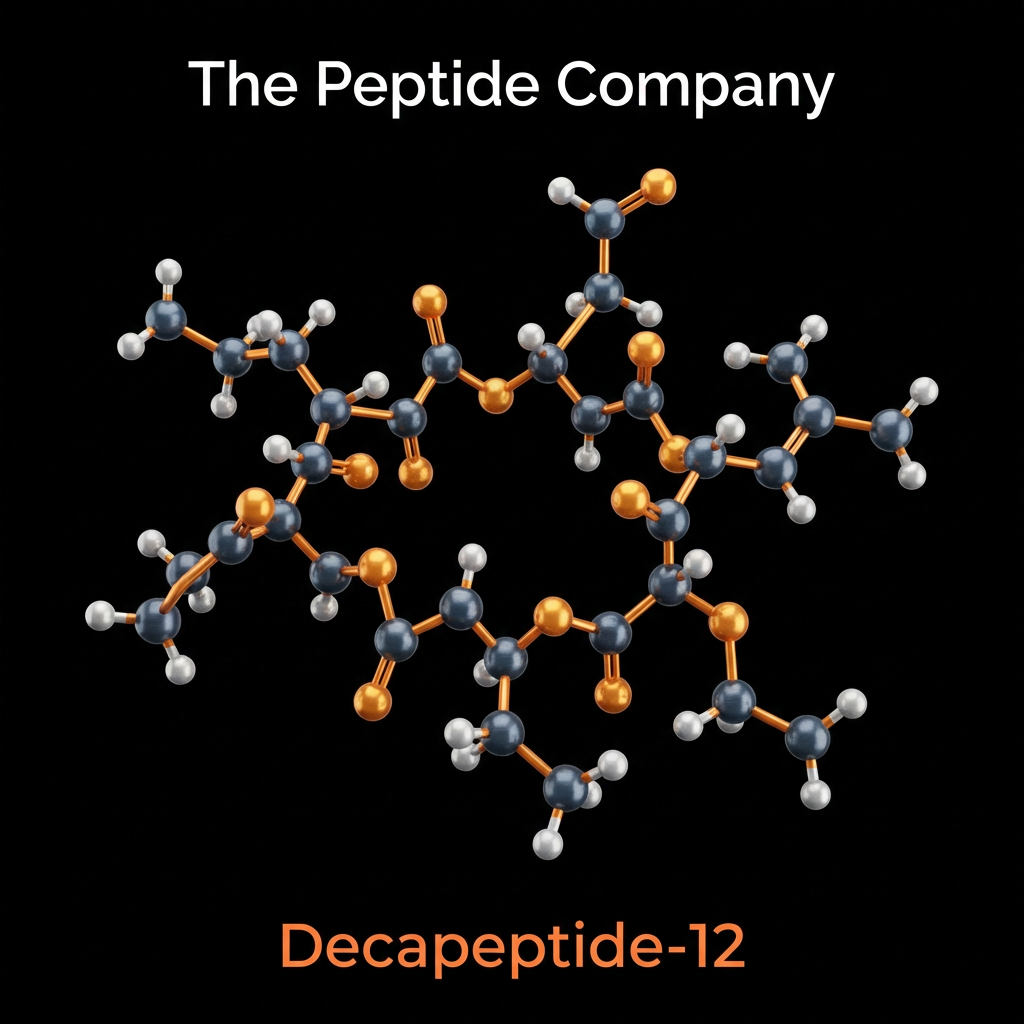
Decapeptide-12, often identified in research contexts under the trade designation Lumixyl, is a synthetic peptide sequence engineered specifically to modulate the biological pathways of melanogenesis. Identified through comprehensive screening of peptide libraries for tyrosinase-binding affinity, Decapeptide-12 (Tyr-Arg-Ser-Arg-Lys-Tyr-Ser-Ser-Trp-Tyr) represents a novel class of hypopigmenting agents that function through competitive inhibition of the tyrosinase enzyme. Unlike traditional phenolic compounds used in dermatology, such as hydroquinone, Decapeptide-12 is characterized in scientific literature by a distinct lack of cytotoxicity, suggesting a mechanism of action that regulates enzymatic activity without compromising cellular viability.
The development of Decapeptide-12 arose from a focused effort to identify peptide motifs capable of interfering with the catalytic activity of tyrosinase, the rate-limiting enzyme in the biosynthesis of melanin. Research findings indicate that this specific decapeptide sequence possesses a high affinity for the active site of tyrosinase, effectively impeding the conversion of tyrosine to DOPAquinone. This inhibition is central to its investigation in models of hyperpigmentation, melasma, and post-inflammatory hyperpigmentation (PIH), where it serves as a critical tool for understanding safe regulatory mechanisms of skin pigmentation.
MELANOGENESIS PATHWAY AND TYROSINASE ENZYME ACTIVITY
Melanogenesis is the complex biochemical process by which melanin is synthesized within melanosomes, specialized organelles located in melanocytes. This pathway is governed primarily by the enzyme tyrosinase, a copper-containing glycoprotein that catalyzes the first two rate-limiting steps of melanin production: the hydroxylation of L-tyrosine to L-3,4-dihydroxyphenylalanine (L-DOPA) and the subsequent
oxidation of L-DOPA to dopaquinone. Research into pigmentation
disorders often focuses on the upregulation of this pathway.
The structural specificity of Decapeptide-12 allows it to intervene precisely at the enzymatic initiation of pigment synthesis. By preventing the formation of dopaquinone, the peptide effectively halts the downstream polymerization reactions that lead to the formation of eumelanin (brown/black pigment) and pheomelanin (red/yellow pigment). This upstream intervention is a primary focus of dermatological research, as it offers a method to control pigmentation at the molecular level before visible pigment deposition occurs.
MECHANISM OF ACTION: COMPETITIVE INHIBITION AND RECEPTOR MODULATION
The defining pharmacological feature of Decapeptide-12 is its mode of inhibition. Unlike depigmenting agents that function through cytotoxicity (cell death) or non-specific oxidative damage, Decapeptide-12 operates via reversible competitive inhibition. This mechanism allows for the temporary suppression of melanin synthesis without inducing permanent damage to the melanocyte or surrounding keratinocytes.
This non-destructive mechanism is particularly relevant in the context of
long-term research applications. Traditional tyrosinase inhibitors often trigger compensatory mechanisms or irritation-induced hyperpigmentation due to cellular stress. By avoiding melanocytotoxicity, Decapeptide-12 allows researchers to study the regulation of constitutive and facultative pigmentation in a controlled manner, isolating enzymatic activity from cellular stress responses.
PRECLINICAL AND CLINICAL RESEARCH FINDINGS ON HYPERPIGMENTATION
Extensive preclinical and clinical investigations have quantified the efficacy of Decapeptide-12 in reducing melanin content. In vitro studies using human melanocyte cultures have demonstrated dose-dependent reductions in melanin synthesis, while clinical trials have assessed its impact on recalcitrant pigmentary disorders such as melasma.
These findings are significant for understanding the temporal dynamics of pigmentation reversal. The data suggests that Decapeptide-12 not only prevents new pigment formation but, by halting the supply of new melanin to keratinocytes, allows for the gradual shedding of existing pigmented cells through natural desquamation. This process highlights the peptide’s utility in research models focused on epidermal turnover and pigmentary clearance.
COMPARATIVE ANALYSIS WITH OTHER DEPIGMENTING AGENTS
To establish its relative potency and safety, Decapeptide-12 has been rigorously compared to the “gold standard” of depigmentation, hydroquinone, as well as other agents like kojic acid and arbutin. These
comparative studies elucidate the distinct advantages of peptide-based
inhibition over small-molecule phenolic compounds.
Further research compares the stability and penetration profiles of these compounds. Peptides generally face challenges regarding transdermal delivery; however, the sequence of Decapeptide-12 appears to possess favorable characteristics for epidermal penetration. Research into delivery vectors and formulation stability continues to explore how this peptide compares to the oxidation-prone nature of kojic acid and vitamin C derivatives.
SAFETY PROFILE AND DERMATOLOGICAL APPLICATION RESEARCH
The safety profile of Decapeptide-12 is a major component of its research literature, particularly regarding its potential for use in sensitive skin types or for prolonged durations where traditional agents are contraindicated. Studies evaluating cutaneous tolerance have consistently demonstrated a lack of pro-inflammatory activity.
SOURCEDSTUDIES
Decapeptide-12 is studied for its role in melanogenesis pathways, particularly its interaction with tyrosinase activity and pigmentation-related cellular signaling in dermatological research models.
Research suggests Decapeptide-12 may influence melanin production through modulation of tyrosinase-related pathways, which are central to melanocyte activity and pigment synthesis.
Research suggests Decapeptide-12 may influence melanin production through modulation of tyrosinase-related pathways, which are central to melanocyte activity and pigment synthesis.
Decapeptide-12 is often compared to other tyrosinase-targeting compounds in research, but it is distinct as a peptide-based sequence studied for targeted cellular signaling interactions.
Decapeptide-12 is a synthetic peptide composed of ten amino acids, designed and studied for its role in pigmentation-related biological pathways.
It is described as a melanogenesis-modulating peptide investigated for its interaction with pigmentation enzymes and signaling pathways within skin-related research models.
Studies often focus on skin tissue models, melanocyte behavior, tyrosinase activity, and cellular signaling pathways involved in pigment regulation.
Decapeptide-12 is categorized as a synthetic bioactive peptide studied within dermatological research, melanogenesis modulation, and cellular signaling frameworks.
PMID: 19997695 — Decapeptide-12 inhibits tyrosinase activity and melanogenesis in human melanocytes
PMID: 21818519 — Regulation of melanogenesis and tyrosinase pathways in skin biology
PMID: 23138504 — Peptide-based modulation of pigmentation pathways in dermatological research
PMID: 17502878 — Mechanisms of tyrosinase inhibition and melanin synthesis control
PMID: 20495387 — Cellular signaling in melanocytes and pigment regulation
PMID: 25607727 — Advances in peptide-based approaches to skin pigmentation research
PMID: 26655390 — Melanocyte biology and regulation of melanin production pathways
PMID: 32041829 — Molecular mechanisms involved in melanogenesis and pigmentation control