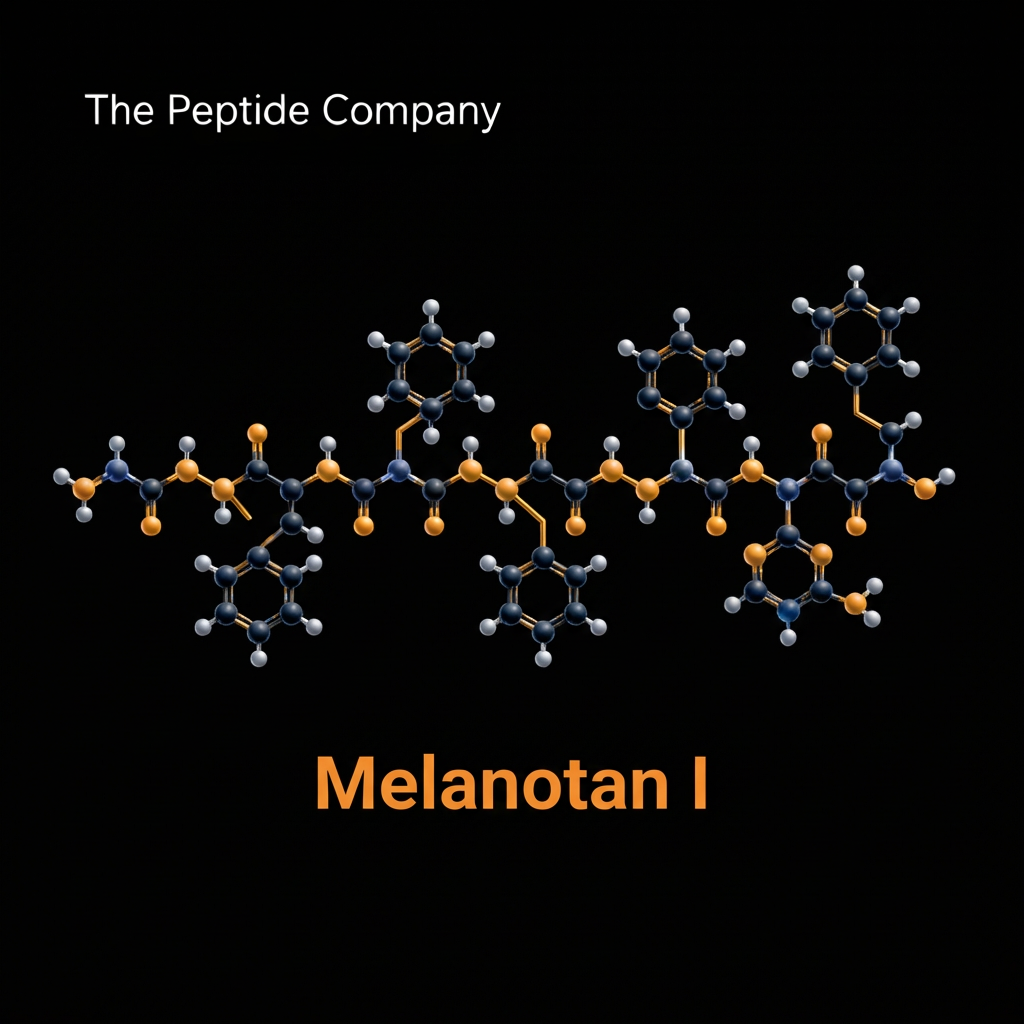
Melanotan I, widely recognized in clinical pharmacology by its generic designation afamelanotide, represents a highly refined synthetic peptide analog of the naturally occurring human alpha melanocyte stimulating hormone. The historical development of this compound traces back to the pioneering research conducted during the 1980s at the University of Arizona. Scientists at the university sought to develop a safe and effective agent capable of inducing a natural protective tan without the requirement of damaging ultraviolet radiation exposure. This foundational research aimed to address the rising global incidence of severe skin cancers by mimicking the body’s innate photoprotective mechanisms, ultimately leading to the creation of a stable, long lasting melanotropic peptide.
In advanced biochemical classification, Melanotan I is categorized as a linear peptide agonist. It perfectly replicates the essential physiological actions of endogenous alpha melanocyte stimulating hormone but features structural modifications that drastically extend its biological half life and enhance its receptor binding affinity. By operating as a full agonist at specific melanocortin receptors located on the surface of pigment producing cells, the peptide initiates a profound systemic cascade of melanogenesis. This targeted activation provides a robust pharmacological tool for researchers investigating the complex molecular pathways that govern skin pigmentation and cellular defense against radiation.
It is crucially important to draw a clear pharmacological distinction between Melanotan I and its structural relative Melanotan II. While both peptides were synthesized during the same foundational research initiative at the University of Arizona, their structural topographies dictate entirely different physiological outcomes. Melanotan I maintains a linear amino acid sequence, whereas Melanotan II features a shortened, cyclic ring structure. This structural variance restricts Melanotan I to highly specific binding profiles, avoiding the broad spectrum receptor activation that causes the intense appetite suppression and sexual arousal frequently documented in Melanotan II research models. Consequently, Melanotan I is recognized as the more targeted and predictable agent for pure pigmentation studies.
Today, the primary research surrounding Melanotan I extends far beyond cosmetic pigmentation. The scientific community heavily utilizes this linear peptide to investigate advanced systemic photoprotection and complex immune modulation. Experimental models leverage the compound to study rare metabolic disorders characterized by extreme photosensitivity, inflammatory skin conditions, and the intricate repair mechanisms that cellular networks use to reverse ultraviolet induced DNA damage. This comprehensive overview sets the stage for a detailed examination of the molecular chemistry, signal transduction pathways, and robust clinical efficacy of this remarkable synthetic bioregulator.
MOLECULAR STRUCTURE AND ALPHA MSH ANALOG CHEMISTRY
The endogenous alpha melanocyte stimulating hormone is a tridecapeptide, meaning it consists of thirteen specific amino acids arranged in a highly conserved sequence. While this natural hormone efficiently regulates pigmentation in the human body, it possesses a remarkably short plasma half life of merely a few minutes due to rapid proteolytic degradation by enzymes circulating in the blood. To create a viable research compound, biochemists needed to manipulate the peptide backbone to resist this rapid enzymatic destruction while simultaneously preserving the critical pharmacophore responsible for receptor activation.
These precise amino acid substitutions result in a synthetic peptide with a molecular weight of approximately 1646 daltons. The newly formed linear structure exhibits a plasma half life that is exponentially longer than the native hormone, allowing for sustained systemic circulation and prolonged receptor engagement. This enhanced metabolic stability ensures that laboratory models can achieve continuous melanocortin receptor activation without the need for constant intravenous infusion, making it an ideal candidate for long term cellular research.
This rigid structural specificity makes Melanotan I the preferred analog for studies strictly focused on dermatological outcomes. By preserving the linear nature of the peptide while optimizing its enzymatic resistance, scientists created a molecule that perfectly balances biological potency with targeted tissue selectivity, setting a new standard in experimental peptide chemistry.
MELANOCORTIN RECEPTOR BINDING AND SIGNAL TRANSDUCTION
The mammalian melanocortin system consists of five distinct G protein coupled receptors, sequentially designated as MC1R through MC5R. Each receptor subtype governs highly specific physiological processes ranging from adrenal steroidogenesis to central metabolic regulation. Melanotan I exerts its primary biological effects through highly selective, high affinity binding to the MC1R subtype, which is predominantly expressed on the cell membranes of dermal melanocytes and various peripheral immune cells.
The accumulation of cyclic AMP within the cellular cytoplasm represents the critical initiation phase of the melanogenic signaling cascade. The cyclic AMP molecules rapidly bind to the regulatory subunits of protein kinase A, liberating its highly active catalytic subunits. These activated kinase enzymes then translocate into the cellular nucleus, where they perform the crucial task of phosphorylating the cyclic AMP response element binding protein, commonly referred to as CREB.
This intricate signal transduction pathway highlights the immense biological power of Melanotan I. By simply engaging the surface receptor, the peptide successfully initiates a massive amplification cascade that fundamentally alters the genetic expression profile of the melanocyte, shifting the cell from a state of resting homeostasis into a highly active state of pigment synthesis and cellular defense.
EUMELANIN SYNTHESIS AND PHOTOPROTECTIVE MECHANISMS
Human skin produces two primary classifications of melanin pigment: pheomelanin, which is a red or yellow pigment associated with fair skin and increased oxidative stress, and eumelanin, which is a dark brown or black pigment known for its robust protective properties. The central objective of Melanotan I research is to evaluate how MC1R activation successfully shifts the cellular production ratio heavily in favor of protective eumelanin synthesis.
Eumelanin acts as a remarkable physical barrier within the epidermal layers of the skin. It possesses the unique capacity to absorb highly energetic ultraviolet radiation and safely dissipate that energy as harmless heat. When Melanotan I stimulates the melanocyte to increase eumelanin production, the newly synthesized pigment is packaged into melanosomes and transported to surrounding keratinocytes, effectively forming microscopic protective caps over the vulnerable DNA of the skin cells.
In addition to its physical shielding capabilities, eumelanin acts as a potent endogenous free radical scavenger. Ultraviolet radiation striking the skin generates massive quantities of reactive oxygen species that destroy cellular membranes and degrade supportive collagen networks. The melanin produced via Melanotan I stimulation successfully neutralizes these toxic oxidative molecules, providing a secondary layer of biochemical defense that preserves overall tissue integrity and prevents premature photoaging.
These photoprotective mechanisms clearly illustrate why Melanotan I is considered a revolutionary tool in dermatological research. By harnessing the body’s natural defense systems, the peptide provides a level of systemic cellular protection that traditional topical sunscreens cannot replicate, protecting every single cell across the entire surface of the skin simultaneously.
ERYTHROPOIETIC PROTOPORPHYRIA RESEARCH APPLICATIONS
Erythropoietic protoporphyria is a rare, severely debilitating genetic metabolic disorder characterized by an absolute intolerance to visible light. Patients suffering from this condition harbor a specific enzymatic defect in their heme biosynthesis pathway, leading to the massive accumulation of a highly reactive molecule known as protoporphyrin IX within their red blood cells and cutaneous vasculature.
When individuals with erythropoietic protoporphyria are exposed to even mild sunlight or intense artificial light, the circulating protoporphyrin IX violently reacts with the photons. This interaction generates massive bursts of free radicals and singlet oxygen species that rapidly destroy surrounding tissue, causing agonizing neuropathic pain, severe swelling, and long lasting skin damage. For decades, researchers struggled to find a viable therapeutic intervention for this condition until the clinical development of afamelanotide as a systemic photoprotective agent.
The overwhelming success of these clinical trials led to a landmark regulatory event. The European Medicines Agency granted official approval for the use of afamelanotide in adult patients suffering from this rare disorder. This approval represented a massive victory for peptide science, proving that synthetic melanotropic signaling could successfully manage severe genetic photosensitivity.
The erythropoietic protoporphyria research models serve as the ultimate validation of Melanotan I efficacy. If the peptide can successfully shield the skin of patients harboring highly explosive phototoxic molecules, its potential utility in preventing standard ultraviolet radiation damage in the general population is immense.
IMMUNE MODULATION AND ANTI INFLAMMATORY RESEARCH
While the stimulation of melanin synthesis remains the most visible effect of Melanotan I, emerging research has heavily focused on the profound immunomodulatory capabilities of the peptide. The melanocortin 1 receptor is not exclusively located on melanocytes; it is also highly expressed on the surface membranes of numerous critical immune cells, including peripheral macrophages, circulating monocytes, and specialized dermal dendritic cells.
When Melanotan I binds to these immune cell receptors, it initiates a powerful anti inflammatory signaling cascade. This mechanism acts as a highly efficient regulatory brake on the immune system, preventing excessive inflammatory responses that often lead to severe autoimmune tissue damage. Researchers utilize this pathway to study how melanocortin signaling can resolve localized skin inflammation without requiring systemic immunosuppressive drugs like corticosteroids.
This anti inflammatory signaling pathway holds significant promise for research involving chronic inflammatory skin conditions. Preclinical models of severe psoriasis and atopic dermatitis demonstrate that treatment with MC1R agonists can effectively calm the hyperactive immune cells responsible for driving the pathological scaling and intense pruritus associated with these diseases.
By exploring this intricate relationship between the neuroendocrine system and the peripheral immune network, scientists are continuously expanding the potential clinical applications of Melanotan I far beyond simple pigment induction, positioning it as a highly sophisticated master regulator of skin health and cellular defense.
VITILIGO AND REPIGMENTATION RESEARCH MODELS
Vitiligo is an acquired, chronic depigmenting disorder characterized by the progressive autoimmune destruction of functioning melanocytes within the epidermis. This pathological process results in the formation of stark white, completely unprotected patches of skin that are highly susceptible to severe sunburn and subsequent cellular damage. Treating vitiligo requires a complex two step approach: halting the autoimmune destruction and simultaneously stimulating any remaining dormant melanocytes to proliferate and repopulate the empty tissue voids.
Melanotan I has emerged as a highly promising candidate in modern vitiligo research models. By acting as an intense survival and proliferation signal for melanocytes, the synthetic peptide encourages the residual pigment cells located deep within the hair follicles to migrate upward into the depigmented epidermis and begin producing vast quantities of protective melanin.
This combination strategy perfectly highlights the biological requirements for tissue repopulation. The light therapy clears the path, while the peptide provides the powerful biological engine necessary to drive massive cellular proliferation. Researchers note that the repigmentation achieved through this method appears highly stable, with the newly formed pigment deeply anchored within the repaired tissue architecture.
The ongoing research into vitiligo repigmentation utilizing Melanotan I represents a massive leap forward in autoimmune dermatology, offering a highly robust, systemic biological solution to a condition that has historically resisted traditional medical interventions.
COMPARISON WITH MELANOTAN II AND SELECTIVITY PROFILE
While both Melanotan I and Melanotan II are synthetic analogs of the same endogenous hormone, their divergent structural chemistries lead to vastly different experimental outcomes. Understanding the profound pharmacological differences between these two peptides is absolutely crucial for researchers attempting to design specific, controlled laboratory studies without encountering severe confounding variables.
The core distinction lies within the physical shape of the molecules. Melanotan I maintains a linear, flexible peptide structure that requires a highly specific receptor binding pocket to activate a cellular response.
This linear geometry restricts its activity almost entirely to the MC1R subtype located in the skin. Conversely, Melanotan II features a cyclic, constrained ring structure that forces the peptide into a highly rigid shape capable of aggressively binding to almost every single receptor in the melanocortin family.
Because Melanotan I does not induce these intense central nervous system reactions, it is considered the vastly superior tool for isolated pigmentation and photoprotection research. Researchers can administer high doses of the linear peptide to achieve massive eumelanin synthesis without the severe nausea, blood pressure spikes, and behavioral modifications frequently caused by the cyclic analog.
This strict selectivity ensures that the data gathered from Melanotan I experiments accurately reflects pure melanocortin 1 receptor biology, establishing it as the absolute gold standard for dermatological peptide research.
TRANSLATIONAL RESEARCH CONSIDERATIONS AND CLINICAL DEVELOPMENT
The successful translation of Melanotan I from an experimental university laboratory compound into a fully approved clinical therapeutic represents one of the greatest success stories in modern peptide pharmacology. The regulatory approval pathway of afamelanotide in Europe for the treatment of erythropoietic protoporphyria established a highly critical precedent, proving that systemic peptide hormones could be manufactured, delivered, and utilized safely in chronic human conditions.
To achieve this clinical viability, researchers had to overcome the inherent delivery challenges associated with peptide therapeutics. Because peptides are instantly destroyed by stomach acid, oral administration was impossible. Daily subcutaneous injections were considered impractical for lifelong preventative therapy. The solution involved the development of a highly advanced, bioresorbable sustained release depot implant.
With the delivery mechanism perfected and the safety profile validated, the scope of ongoing research continues to expand rapidly. Current clinical models are actively evaluating the efficacy of the peptide implant in treating other severe light induced disorders, including solar urticaria and severe polymorphic light eruption. Furthermore, scientists are exploring the robust anti inflammatory properties of the compound in chronic severe acne vulgaris and severe burn recovery models.
As clinical trials progress and our understanding of the vast melanocortin signaling network deepens, Melanotan I stands as a testament to the immense power of rational drug design, offering profound systemic protection through the elegant manipulation of the body’s own natural defense pathways.
SOURCED STUDIES
Melanotan I is studied for its interaction with melanocortin receptors, particularly MC1R, and its role in regulating melanin production and pigmentation pathways.
It mimics alpha-MSH activity, activating MC1R to stimulate melanin synthesis in melanocytes in experimental models.
It is studied in pathways related to melanogenesis, UV-response signaling, oxidative stress response, and skin pigmentation regulation.
Melanotan I shows strong affinity for MC1R, which is primarily involved in pigmentation processes.
It is used to study melanin production, photoprotection mechanisms, and melanocortin system signaling.
Melanotan I is a synthetic analog with enhanced stability and longer-lasting receptor activity compared to native alpha-MSH.
PMID:
15044332 — Melanocortin receptor biology and pigmentation regulation
12194986 — Alpha-MSH analogs and melanogenesis mechanisms
10444541 — MC1R signaling and skin pigmentation pathways
10713178 — Melanotan I effects on melanocyte activity
16123359 — UV-induced pigmentation and melanocortin system
18048454 — Melanocortin peptides and photoprotection research
20359502 — MC1R activation and oxidative stress response
22095472 — Synthetic melanocortin analogs in experimental models
Decapeptide-12 : Melanogenesis
KPV: The Anti-Inflammatory Tripeptide and Cellular Repair Mechanism
IGF-1 Analogues: LR3 and DES Structural Variations and Receptor Binding in Research Models
Melanotan I is a synthetic melanocortin analog studied for its interaction with MC1R receptors and pathways related to pigmentation, UV response, and cellular signaling. For research use only.