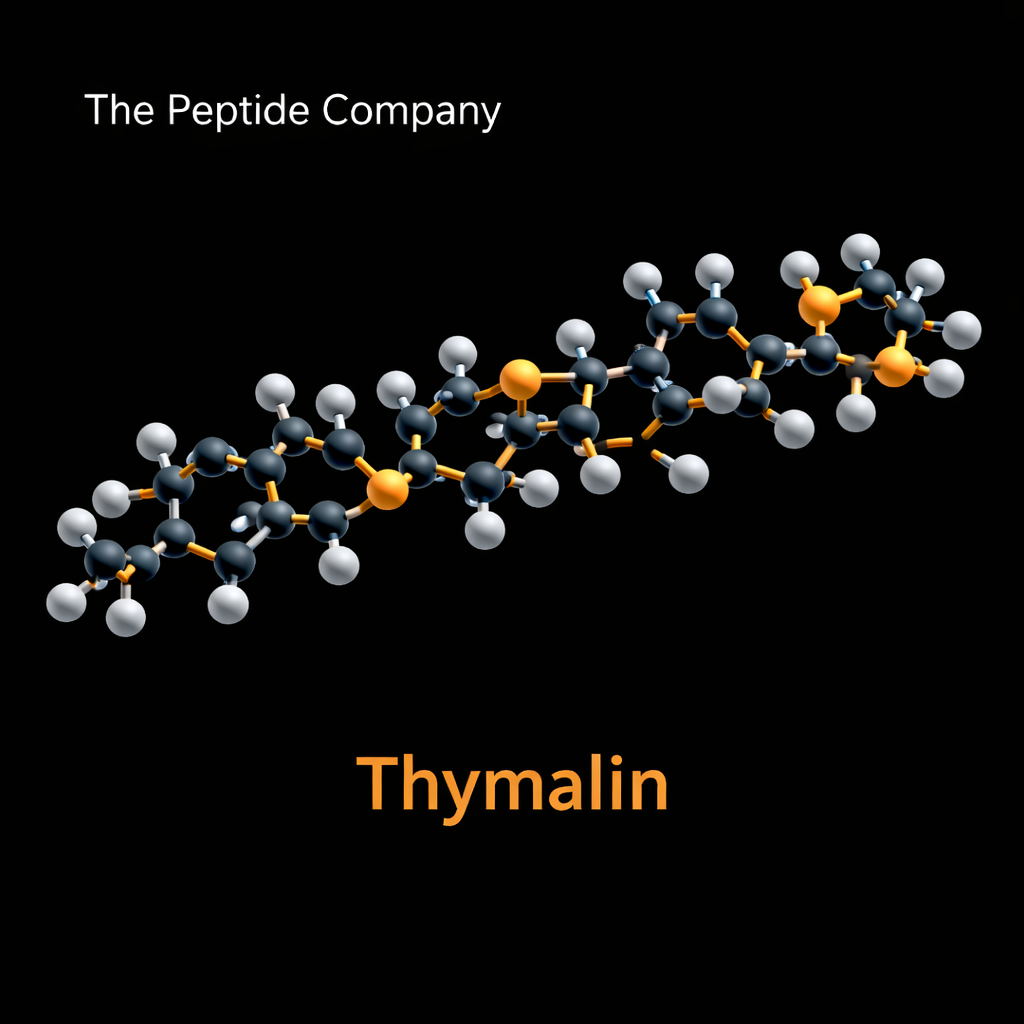
Abstract & Overview
Thymalin is a tissue-specific bioregulatory peptide derived from thymic tissue and classified within the broader family of cytomedins. It has been studied for its role in regulating immune cell differentiation, thymic function, and age-associated immune decline. Unlike thymosin peptides that act primarily through receptor-mediated immune signaling, Thymalin functions at the genomic and epigenetic level, influencing gene expression patterns involved in immune surveillance, cellular maturation, and systemic homeostasis. As a research compound, Thymalin serves as a central model for understanding peptide-based regulation of immune aging and thymic involution.
Background: Thymus Function and Immune Aging
The thymus is a primary lymphoid organ responsible for the maturation and selection of T lymphocytes. During early life, thymic activity is robust, ensuring effective immune surveillance and tolerance. With aging, the thymus undergoes involution, characterized by reduced epithelial tissue, diminished thymopoiesis, and impaired immune competence. This decline contributes to immunosenescence, increased susceptibility to infection, reduced vaccine responsiveness, and dysregulated inflammatory signaling. Research into thymic bioregulators such as Thymalin focuses on restoring or stabilizing thymic signaling pathways at the cellular and genomic level.
Molecular Classification and Cytomedin Biology
Thymalin belongs to the class of short regulatory peptides known as cytomedins, typically composed of two to four amino acids. These peptides exhibit pronounced tissue specificity and organotropism, allowing them to selectively influence gene expression within their target tissues. Thymalin’s peptide sequences were originally isolated from thymic extracts and later synthesized to enable controlled experimental investigation. Cytomedins differ fundamentally from classical hormones or cytokines, as their primary mode of action involves modulation of transcriptional and translational processes rather than receptor activation alone.
Mechanism of Action: Genomic and Epigenetic Regulation
The primary mechanism attributed to Thymalin involves peptide-mediated regulation of gene expression within immune and epithelial cells of thymic origin. Thymalin interacts with chromatin-associated proteins and nucleic acid structures, influencing transcriptional activity of genes responsible for lymphocyte differentiation, immune signaling balance, and cellular repair. Experimental data suggest that Thymalin modulates histone acetylation states and chromatin accessibility, thereby supporting stable gene expression patterns essential for immune competence. This epigenetic mode of action distinguishes Thymalin from short-acting immune peptides.
Effects on T-Cell Differentiation and Immune Balance
Research models indicate that Thymalin supports normalization of T-cell subpopulation ratios, including helper and cytotoxic T lymphocytes. By stabilizing thymic gene expression programs, Thymalin contributes to proper T-cell education and selection processes. This regulatory influence may help maintain immune tolerance while preserving effective pathogen response. In aging models, Thymalin has been associated with restoration of immune responsiveness and reduction of maladaptive inflammatory signaling.
Thymalin and Genomic Stability
An important aspect of Thymalin’s biological profile is its association with genomic stability. Studies have demonstrated increased expression of DNA repair enzymes and reduced markers of chromosomal instability following Thymalin exposure in experimental systems. These effects align with broader observations that tissue-specific bioregulators contribute to preservation of genomic integrity, particularly in rapidly renewing or immune-related tissues. Maintenance of genomic stability is central to preventing immune dysfunction and malignant transformation.
Comparative Analysis: Thymalin vs Thymosin Alpha-1
While both Thymalin and Thymosin Alpha-1 originate from thymic biology, their mechanisms and research applications differ significantly. Thymosin Alpha-1 primarily functions as an immune signaling peptide, enhancing innate and adaptive immune responses through receptor-mediated pathways. Thymalin, by contrast, operates at the level of gene regulation and epigenetic control, exerting longer-term modulatory effects on immune cell development and thymic function. This distinction positions Thymalin as a foundational bioregulator rather than an acute immune activator.
Role in Immune Aging and Systemic Homeostasis
Thymalin is frequently studied in the context of immune aging and systemic decline. By influencing thymic gene expression and lymphocyte maturation, Thymalin may counteract aspects of immunosenescence that contribute to chronic inflammation and impaired tissue repair. Its regulatory effects extend beyond the immune system, as balanced immune signaling is essential for maintaining systemic homeostasis and preventing age-associated pathologies.
Research Findings and Experimental Models
Experimental investigations involving Thymalin have demonstrated normalization of immune parameters in models of thymic dysfunction and aging. Observed outcomes include improved lymphocyte counts, enhanced immune responsiveness, and reduced inflammatory markers. In cellular studies, Thymalin has been shown to stimulate RNA synthesis and protein translation in immune cells, supporting its role as a genomic regulator. These findings underpin continued interest in Thymalin as a research tool for immune restoration studies.
Integration With Other Bioregulators
Within the bioregulator framework, Thymalin is often examined alongside peptides such as Vilon, Pancragen, Cardiogen, and Bronchogen. Each exhibits tissue-specific regulatory effects, while collectively contributing to systemic cellular balance. Thymalin’s role within this network highlights the cooperative nature of bioregulatory peptides in maintaining organism-wide homeostasis through targeted genomic modulation.
Limitations and Ongoing Research Questions
Despite extensive experimental study, important questions remain regarding Thymalin’s tissue specificity, long-term genomic effects, and interactions with other regulatory pathways. Further research is required to clarify the precise molecular targets of Thymalin and to delineate its role within complex immune and aging networks. As with all bioregulators, translation from experimental models to broader biological understanding remains an active area of investigation.
Summary
Thymalin represents a cornerstone thymic bioregulator peptide that provides critical insight into immune aging, thymic function, and epigenetic control of cellular homeostasis. Through genomic and chromatin-level regulation, Thymalin supports immune balance, genomic stability, and systemic resilience. Its study continues to inform broader research into peptide-based regulation of aging and immune competence.
Educational & Research Disclaimer
This document is provided for educational and scientific research purposes only. No medical, therapeutic, or usage claims are made. Thymalin and related compounds are not approved for human use and are intended solely for controlled laboratory and academic investigation.
Thymalin is a thymus-derived bioregulatory peptide studied for its role in immune system signaling and cellular regulation.
Thymalin is classified as a cytomedin, a group of short peptides associated with tissue-specific cellular modulation.
Research suggests Thymalin influences immune cell differentiation and signaling pathways related to thymic function.
Thymalin is studied in aging models due to its association with immune system regulation and age-related cellular changes.
Thymalin is associated with thymic activity, particularly in processes related to immune cell development and maturation.
Studies indicate Thymalin may interact with gene expression pathways, contributing to cellular homeostasis and regulation.
Thymalin is investigated in research involving immune signaling, epigenetic regulation, and cellular aging mechanisms.
Thymalin is described as a tissue-specific regulatory peptide involved in immune modulation and cellular communication.
Its thymus-specific origin and focus on immune-related signaling pathways distinguish it from more generalized peptides.
Research suggests Thymalin may play a role in epigenetic modulation, particularly in relation to immune system regulation and aging biology.
PMID: 10378166 — Thymalin and its role in regulation of immune system function
PMID: 11241068 — Thymic peptides and their influence on T-cell differentiation and immune signaling
PMID: 12186792 — Cytomedins and their role in gene expression and cellular regulation
PMID: 12934759 — Thymalin effects on immune restoration and thymic activity
PMID: 14585163 — Bioregulatory peptides in aging and immune system modulation
PMID: 15798312 — Epigenetic regulation by short peptides in immune cells
PMID: 16804023 — Thymic peptides and mechanisms of immune homeostasis
PMID: 18261869 — Cytomedins and tissue-specific gene expression control
PMID: 21406990 — Role of peptide bioregulators in immune and endocrine signaling
PMID: 25900330 — Mechanisms of peptide regulation in aging and immune resilience
FOXO4-DRI : Targeting Cellular Senescence Through p53–FOXO4 Disruption and Senolytic Research
Thymosin Alpha-1 (Tα1): Immune Resilience and the Science of Thymic Restoration
KPV: The Anti-Inflammatory Tripeptide and Cellular Repair Mechanism